

Handful of Vessels Crossing Hormuz as US Blockade Takes Effect


(Bloomberg) -- A handful of vessels braved transits through the Strait of Hormuz on Wednesday, hours after the US resumed a naval blockade of Iran and following an upsurge in attacks on ships.
A US-sanctioned supertanker laden with Iranian oil sailed outbound into the Gulf of Oman, before coming to a stop not long after exiting the strait, according to ship-tracking data.
A Greek-owned Suezmax filled with Saudi crude began signaling again, approaching Fujairah, outside the Persian Gulf, after it last indicated that it was in the gulf three days ago. Two small fuel tankers and two bulk carriers were also sailing through the strait in either direction.
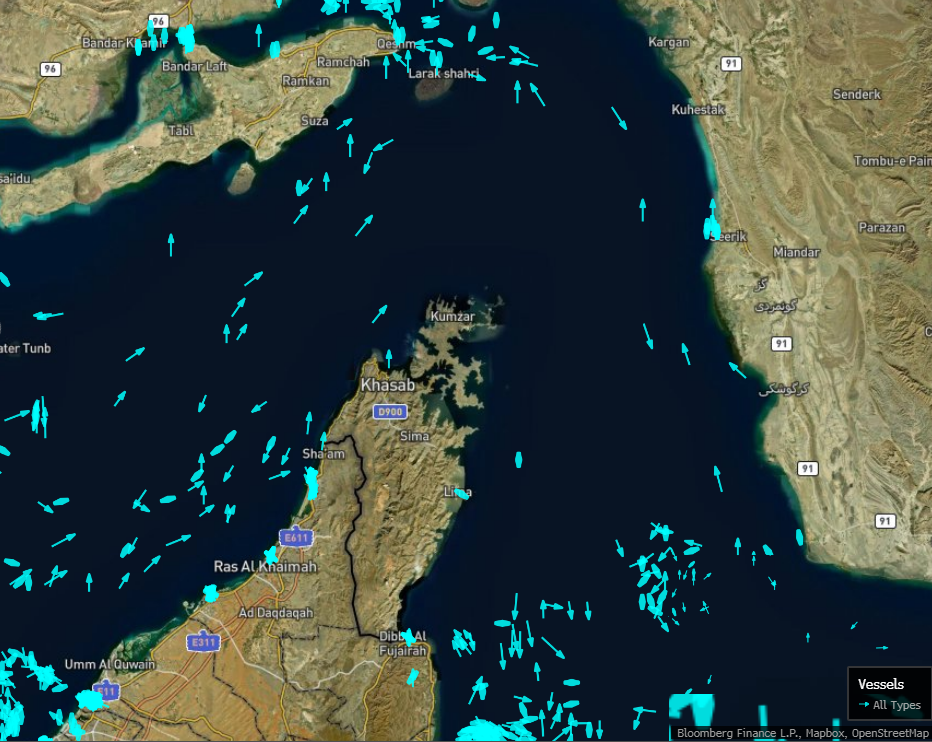
Tensions have ratcheted higher in recent days as the US and Iran both try to assert authority over the waterway. Shipowners willing to cross Hormuz face a dilemma of taking an Iran-approved route and exposing themselves to compliance problems, or sailing along the Omani coast and risk getting attacked by Tehran. Some vessels have chosen to turn off their transponders, an approach the Greek tanker appears to have taken.
The US began its blockade of Iranian shipping on Tuesday, resuming a tactic used in April and May that was successful in constraining the Islamic Republic’s exports. Iran struck two United Arab Emirates-linked supertankers that had gone dark while transiting Hormuz with cruise missiles on Tuesday, according to the UAE’s defense ministry.
President Donald Trump, meanwhile, backed down on a plan to impose a 20% charge on cargo through the strait after the US’s gulf allies urged him to drop it.
©2026 Bloomberg L.P.








