

Trump Fuels Hopes of Hormuz Opening With Hints Deal Is Close


(Bloomberg) -- US President Donald Trump said a deal on the Strait of Hormuz is possible as early as Wednesday, as expectations build for an arrangement that allows for the reopening of the critical waterway.
“It could happen. Tomorrow or the next day,” Trump told reporters in Los Angeles, when asked about reports that an announcement is imminent. Talks with Iran are “moving along very nicely,” he added. “We’ll know in 48 hours.”
The US, Iran and Oman are preparing to announce a 60-day agreement on shipping through Hormuz, Axios reported, citing two regional sources and a US official. Under the proposal, inbound vessels would use a northern lane near Iran, while outbound traffic would travel through Omani waters in coordination with the Islamic Republic.
No tolls or fees would be charged during the transitory agreement, Axios said. Iran and Oman would also work to clear mines from a middle shipping lane for two-way traffic.
Iranian state TV played down the outcome of the discussions on Wednesday, citing a person familiar with the matter as saying an agreement between Tehran and Muscat would not necessarily mean the strait would open immediately. That would be contingent “on a change in US behavior,” according to the report.
It’s unclear if the US will agree to lift a naval blockade on Iranian ports as part of any deal on Hormuz, something Iran has insisted on.
The various reports and comments about an agreement on the Strait of Hormuz come after months of deadlock between the US and Iran over how to conclude the five-month war. While fighting between the sides has paused for now, a number of issues remain unresolved — not least Iran’s nuclear program — and there hasn’t been an agreement to start formal talks.
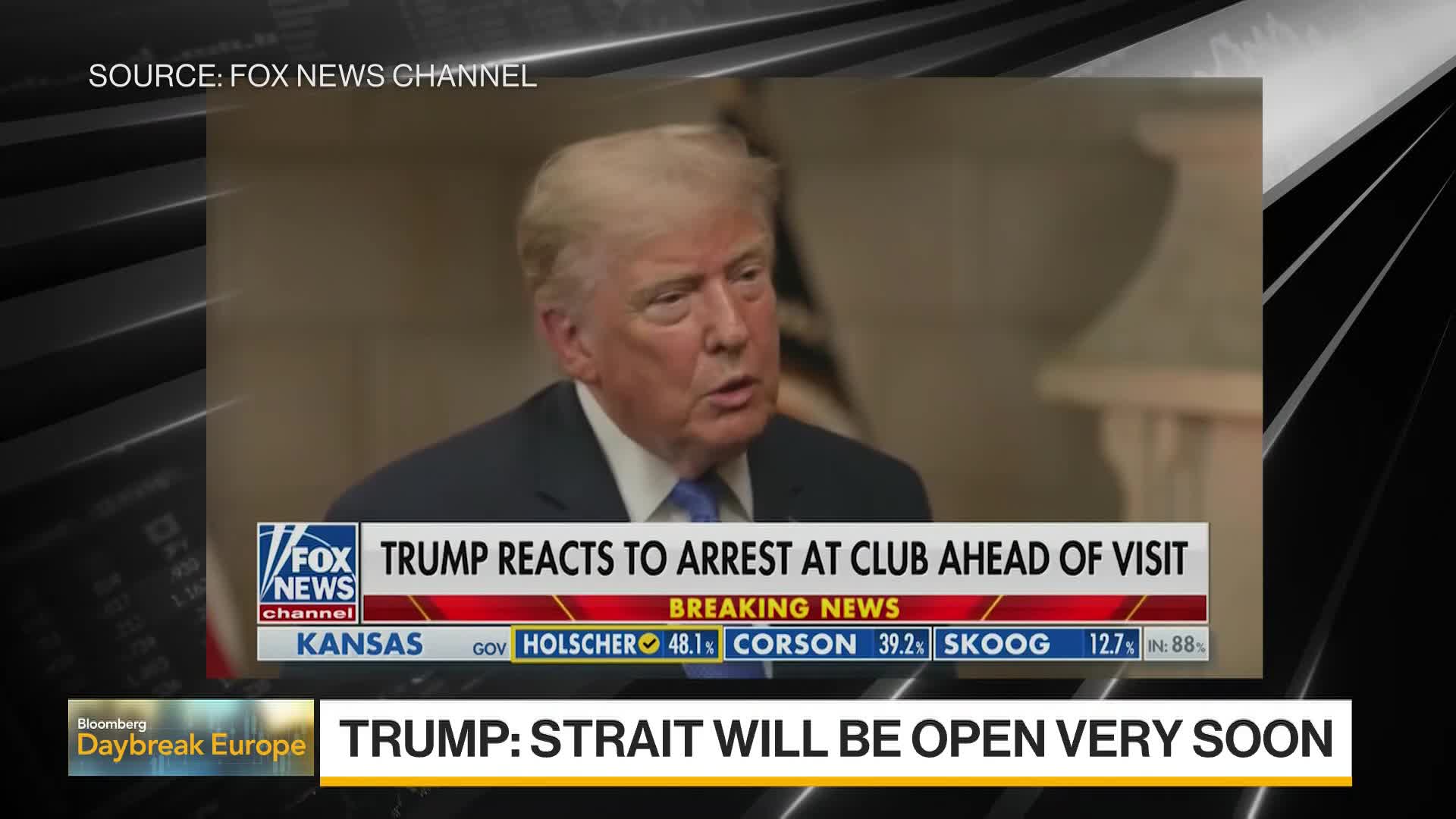
In a Fox News interview recorded Tuesday, Trump repeated a threat that “if they don’t make a deal, it’s going to be too bad.” Over the weekend, the president held off on attacks he said would have been the largest since World War II.
Signs that negotiations are edging closer to a resolution, including from Qatar and US officials on Tuesday, has helped ease the pressure on oil prices, with benchmark crude down about 9% this week.
Brent futures traded at around $80 a barrel on Wednesday, up 1%, after a fresh threat by Yemen’s Houthi militants to escalate attacks on Middle East shipping led traders to reverse an earlier decline.
The Iran-back group said it would target Saudi tankers in the north of the Red Sea, increasing the risks of transiting a waterway that’s become Riyadh’s main export route since the Strait of Hormuz was disrupted.
An India-flagged commercial ship sank off the coast of Yemen on Tuesday after coming under attack in the Red Sea. All 13 Indian seafarers aboard were rescued.
Trump discussed efforts to de-escalate US-Iran tensions with Qatar’s Emir Sheikh Tamim Bin Hamad Al-Thani in a call Tuesday, according to the Gulf state’s government. A White House official confirmed the call, but didn’t offer additional details.
A short-term deal could help normalize commercial shipping in the strait — a crucial conduit for global energy supplies — and prevent the resumption of fighting in the Middle East. Even if an agreement is reached, there’s no guarantee it will lead to a permanent end to the war.
The previous US-Iran ceasefire lasted less than a month before collapsing over disagreements about control of Hormuz, highlighting the risk that military strikes and Iranian retaliation may resume if a new agreement unravels.
In a possible concession that could form part of an agreement, Iran is considering allowing European nations to remove mines from the strait, according to diplomats familiar with the matter, who spoke on condition of anonymity to discuss sensitive information.
That is contrary to Iran’s public stance, but in private meetings in recent weeks Tehran has softened its position. Iran’s foreign ministry didn’t immediately respond to a request for comment.
(Adds context on naval blockade in sixth paragraph, shipping incident in 11th.)
©2026 Bloomberg L.P.








