

Saudi Arabia Tries Diplomacy to Stop Houthi Attacks Escalating


(Bloomberg) -- Saudi Arabia wants to contain a renewed conflict with Houthi militants through behind-the-scenes diplomacy, according to people familiar with the matter, in a bid to prevent clashes with the Iran-backed group hurting its oil industry and economy.
The kingdom has held talks with the Yemen-based Houthis via Omani mediators and is still preparing military options in case diplomacy fails, according to the people, who spoke on condition of anonymity so they could discuss sensitive information.
Riyadh conducted limited airstrikes on Houthi positions for two straight days in late July, but is not thought to have done so again as it tries to find a diplomatic resolution with the Islamist organization, which controls most of Yemen’s population, the people said.
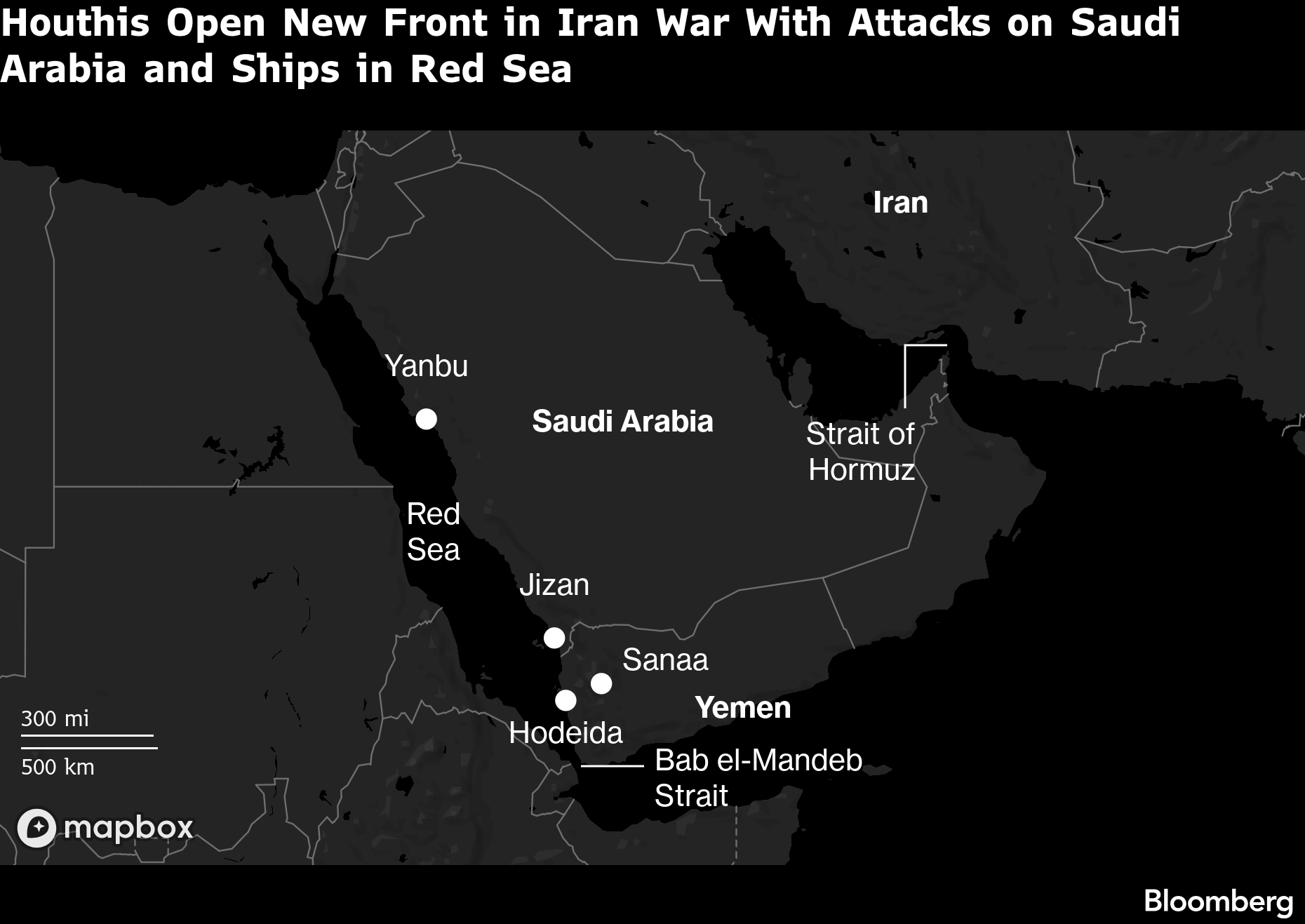
Saudi Arabia has held intermittent Oman-mediated talks with the Houthis since a 2022 ceasefire. Now, Riyadh wants to restrain the Houthis and protect its Red Sea ports, from which it’s exporting the bulk of its oil with the Strait of Hormuz effectively closed.
The Saudi, Omani and US governments didn’t immediately respond to requests for comment.
The Houthis are pressing for more economic concessions from Riyadh, the people said. Following the truce four years ago, the group has repeatedly said Saudi Arabia should pay salaries for some Yemeni civil servants and lift all restrictions on goods and people going into Houthi-run areas as part of any lasting peace.
The renewed diplomacy underscores Saudi Crown Prince Mohammed bin Salman’s dilemma after the Houthis opened a new front in the Iran war by threatening any ships calling at the kingdom’s ports.
Saudi Arabia wants to respond to Houthi attacks without being sucked into renewed fighting. The 2022 deal followed a years-long and unsuccessful bombing campaign led by the Saudis and United Arab Emirates to oust the Houthis, who captured the Yemeni capital of Sanaa soon after a civil war started in 2014. They also hold the crucial port of Hodeida on the Red Sea.
US officials have privately discouraged a major Saudi military retaliation to Houthi strikes on vessels off its Red Sea coast, regional and western diplomats said. Washington, they said, fears that worsening Saudi-Houthi hostilities would further disrupt global shipping and energy markets, and possibly close the Bab el-Mandeb strait, another chokepoint vital for flows of energy. Oil prices have already soared 35% this year mainly because of the closure of Hormuz.
A broader military campaign risks drawing Saudi Arabia even deeper into the regional conflict with Iran. Riyadh had to defend itself against Iranian missile and drone attacks during the height of the war in March and early April. More recently, the Houthis and Iran-supported militias in Iraq have fired projectiles at its petroleum facilities, including refineries.
The Saudi economy shrank 4.8% year-on-year in the second quarter — its worst performance since the Covid-19 pandemic — as the Iran war forced it to cut back oil exports.
“The kingdom’s priority is to prevent further escalation while safeguarding regional stability,” said Abdulaziz Al Sager, chairman of the Gulf Research Center, a think tank based in Jeddah, Saudi Arabia. The government will only resume broader military operations in response to “unjustifiable attacks” such as strikes on critical infrastructure, he said.
Overlapping Alliances
The Houthis’ July 20 announcement that they would blockade Saudi ports effectively made good on Iran’s longtime threat to expand the war to trade routes beyond the Persian Gulf. Five days later, the Houthis fired missiles and drones at oil giant Saudi Aramco’s facilities in the Red Sea port towns of Jizan and Yanbu.
The Houthis are part of Iran’s Axis of Resistance, a group of anti-US and anti-Israel militias in the Middle East that includes Hezbollah in Lebanon and Hamas in Gaza. Soon after the Americans and Israelis started bombing Iran this year, the Islamic Republic pushed the Houthis to prepare for a possible campaign on ships near the southern Red Sea, Bloomberg reported.
The Houthis attacked ships in the southern Red Sea and Gulf of Aden from late 2023, when war in Gaza between Israel and Hamas started. The Houthis said they were acting in solidarity with Palestinians and continued until a ceasefire in Gaza in October 2025.
Yemenis are less supportive of the Houthis starting a military campaign for Iran than for the Palestinians, according to Bloomberg Economics analysts. As such, the group has justified its recent actions as a response to a “siege” on Yemen, referring to Saudi restrictions on the country’s ports and airports. The group also pointed to a Saudi Arabian strike on Sanaa airport last month.
Iran has framed the Red Sea clashes as a local dispute to be resolved through Saudi-Yemeni dialog, even as state media celebrated them as part of the “resistance.”
“Solidarity with Iran is central to their regional strategy and military partnership, but they also recognize the need to maintain domestic support,” said Nadwa Al-Dawsari, a Yemen expert at the Middle East Institute, based in Washington. “That is why they consistently frame their actions through a Yemeni nationalist lens.”
©2026 Bloomberg L.P.