

HORMUZ TRACKER: Widespread U-Turns Take Place Amid Iran Warning


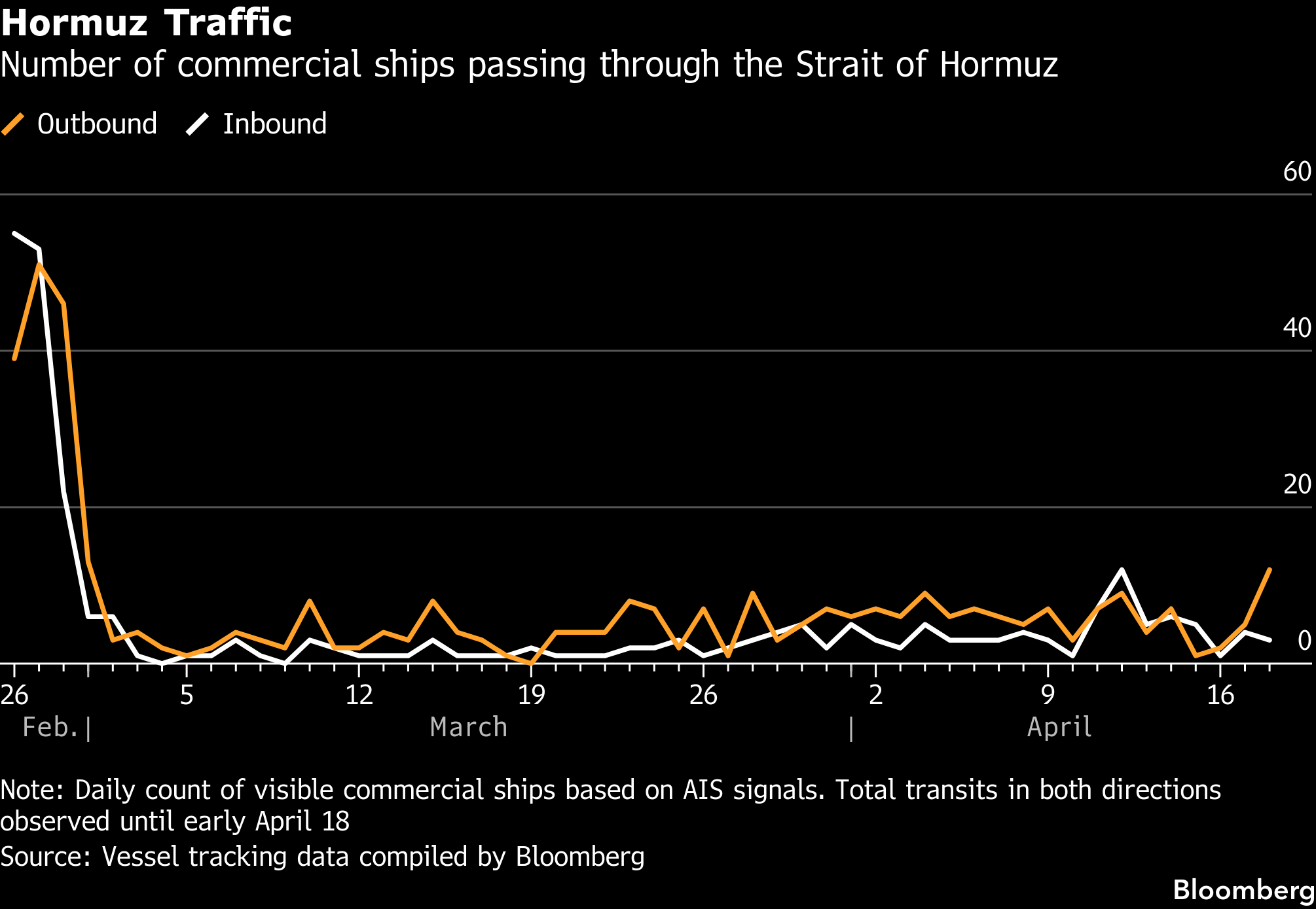
(Bloomberg) -- Shipping through the Strait of Hormuz briefly surged early Saturday before collapsing as Iran warned shipping in the area that the corridor was closed to maritime traffic once again. A broadcast, heard by vessels in the area, coincided with multiple freighters performing U-turns.
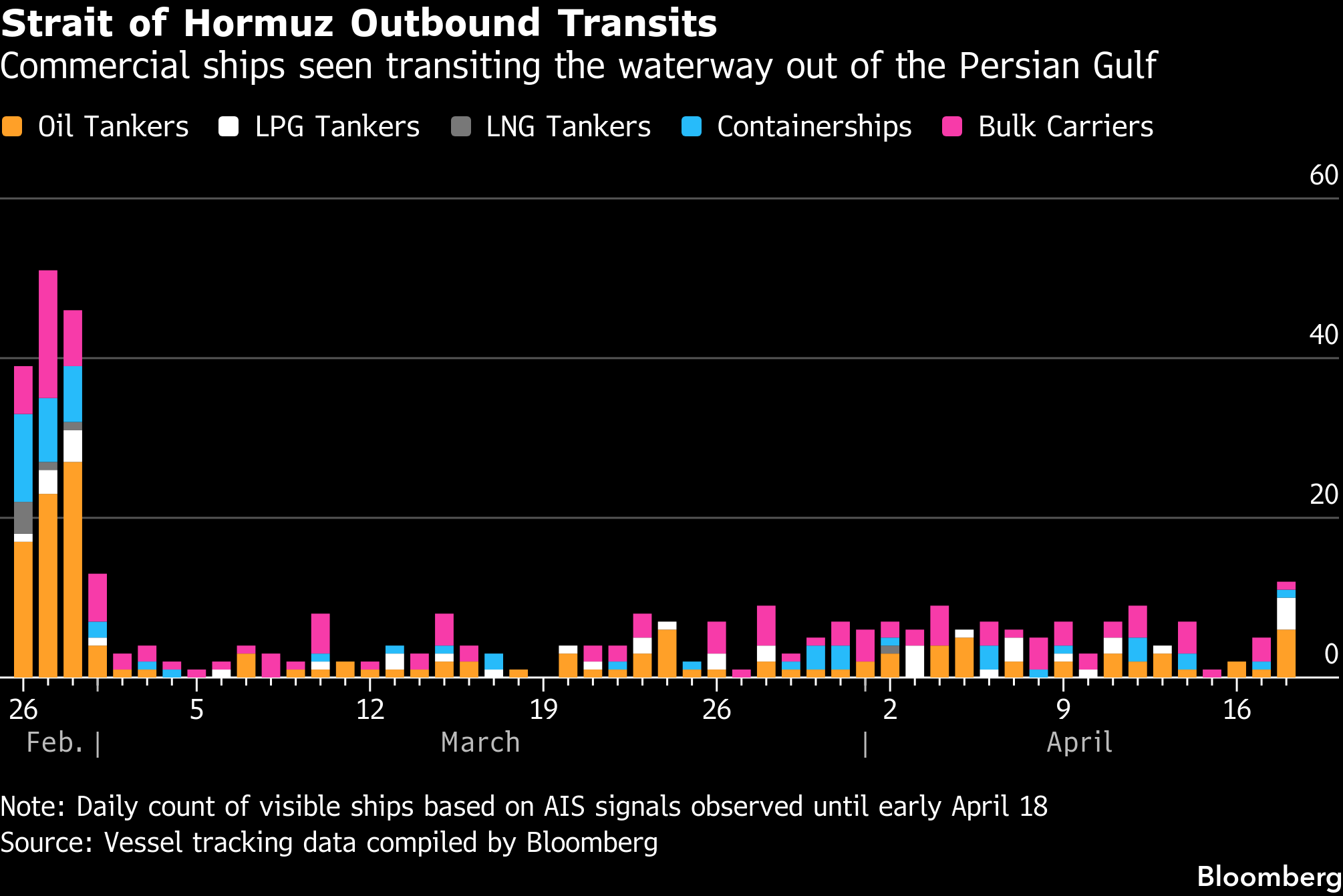
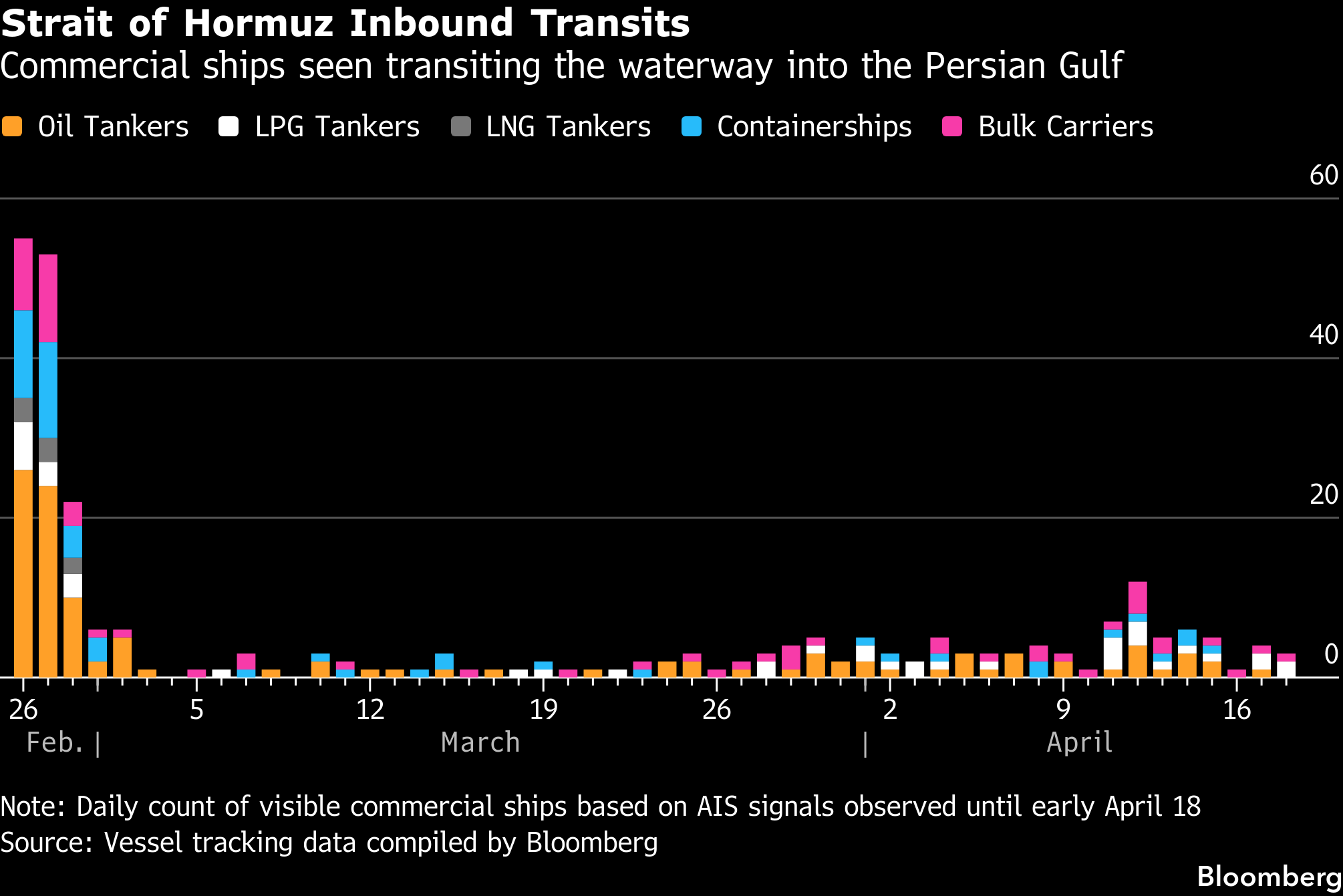
A total of 12 commercial ships completed successful outbound transits on Saturday morning London time, before it became clear that Iran was halting transits again. At least half of those that did get out had links to Iran. During the same period, inbound movement was restricted to just three carriers, vessel-tracking data compiled by Bloomberg show.
The oil-ship transits that did take place were led by that of the supertanker FPMC C Lord, hauling 2 million barrels of crude from Qatar and Saudi Arabia. A handful of smaller fuel tankers and liquefied petroleum gas carriers also managed to rush through around the same time.
However, multiple ships, including at least nine tankers, reversed course and abandoned outbound transits. They were joined by at least four container-ships operated by France’s CMA CGM SA which also turned back. The company declined to comment.
The chaos happened just hours after both Washington and Tehran suggested the waterway was fully reopened. However, the Trump administration clarified that its own blockade of Iranian shipping remained in place, with Tehran then warning that the strait would be closed again.
At least four small passenger ships were also spotted departing the Gulf on Saturday, hugging tight to Oman’s shoreline.
The commercial vessels entering Hormuz with active AIS signals during the past day were confined to a narrow northern lane near the Iranian islands of Larak and Qeshm.
The FPMC C Lord was accompanied by a crude-laden Aframax and four additional fuel tankers, including one with Iranian links. Four liquefied petroleum gas carriers were also observed: one Vietnamese vessel and three Iranian ones. An Iranian bulker and a containership rounded out the outbound commercial traffic seen on Saturday morning.
The blockades may encourage ships to switch off their tracking signals to avoid detection, making it harder to get an accurate picture of what’s going through. This means transit figures will sometimes be revised higher, when vessels pop up far way from the riskiest waters.
Inbound transits included a bulk carrier and two LPG ships.
NOTES:
Because vessels can move without transmitting their location until they’re well away from Hormuz, automated positioning signals were compiled over a large area covering the Gulf of Oman, the Arabian Sea and the Red Sea to detect those that may have departed or entered the Gulf.
When potential transits are identified, signal histories are examined to determine whether the movement appears genuine or is the result of spoofing — where electronic interference can falsify the apparent position of a ship.
Some transits may not have been detected if vessels’ transponders haven’t been switched back on. Iran-linked oil tankers often steam from the Gulf without broadcasting signals until they reach the Strait of Malacca about 10 days after passing Fujairah in the UAE. Other ships may be adopting similar tactics and won’t show up on tracking screens for many days.
This tracker will be published during heightened tensions involving Iran, and aims to capture traffic for all classes of commercial shipping.
©2026 Bloomberg L.P.








