

Commodity Windfalls Are Rolling Into Russia From War in Iran


(Bloomberg) -- The Iran war has generated billions of dollars of additional oil revenues for Russia, but Moscow’s windfall extends well beyond crude to gas, grain, aluminum and fertilizers.
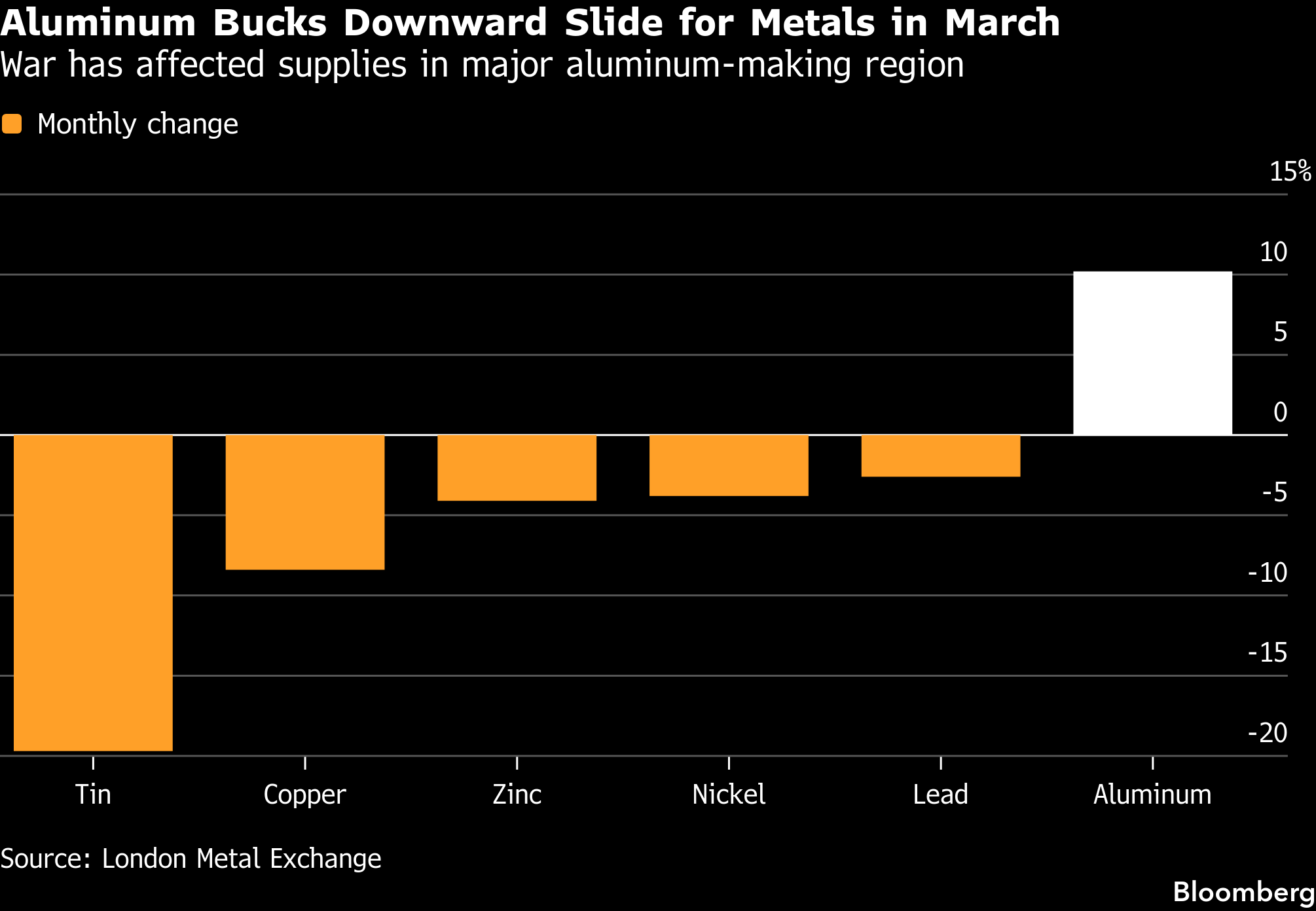
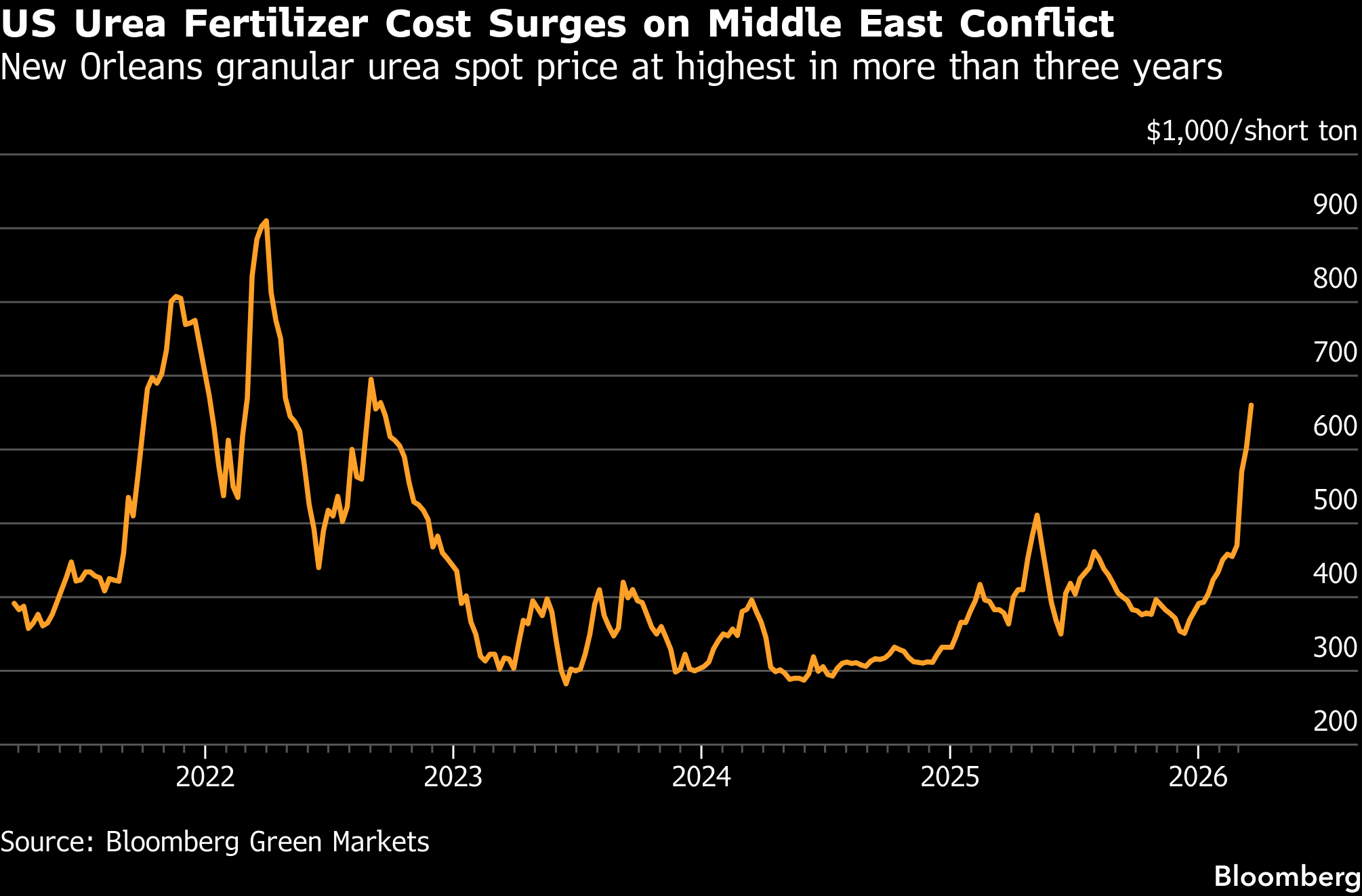
Tehran’s stranglehold on the Strait of Hormuz has choked off Persian Gulf crude flows, boosting the price of Russia’s flagship Urals grade. But the waterway is also an important conduit for shipments of aluminum, liquefied natural gas and some fertilizers. As supplies have been squeezed, prices have surged — aluminum by 12% and urea by almost three-quarters since the start of the conflict.
There are also signs that some Russian commodities are losing the pariah status that’s weighed on them since the Kremlin’s invasion of Ukraine four years ago. Washington has eased sanctions on Moscow’s barrels at sea, but western customers are also starting to show interest in the Russian metals they long shunned. And the nation may also benefit as competition intensifies between Asian and European LNG buyers.
“Without the war in Iran, the situation in Russian economy would be much worse than it is now,” said Alexander Gabuev, director of the Carnegie Russia Eurasia Center said by email.
A week before the US and Israel struck Iran, Russia had been considering downgrading its growth forecast as tougher sanctions over Ukraine hit oil revenues. Government officials were even considering slashing the oil price used for the country’s key budget rule to as low as $45 to $50 a barrel.
The war in the Persian Gulf has driven a dramatic turnaround. On Friday, Russia’s flagship Urals crude grade averaged $93.40 a barrel in the country’s western ports, according to data from Argus Media.
Russian oil exports could get a $40 billion boost if the price of crude remains elevated to the end of this year, according to analysis by several European governments and shared with Bloomberg News by officials on condition of anonymity. Should the US-Israeli war end quickly, with Hormuz reopening and oil prices returning to pre-war levels within three months, the boost would be limited to under $10 billion.
“The windfall for the Russian economy has been real,” said Bota Iliyas, a geopolitical and risk analyst at London-based risk assessment firm Schillings.
While oil remains an important source of revenue for the Kremlin’s coffers, other commodities are also benefiting from the Middle East conflict.
Benchmark prices for aluminum are heading toward a four-year high after Iranian drones and missiles hit two major plants in Bahrain and the United Arab Emirates. That’s improved the outlook for Russian metal, which has been largely shunned by Western buyers since 2022.
United Co. Rusal International PJSC is receiving inquiries from the US and Europe about spare capacity, according to people familiar with the matter. In recent years, the Russian company that accounts for more than 5% of global output has been forced to redirect about half of its sales to China due to western restrictions.
Should the US or Europe ease trade restrictions on Russian metals, Rusal could reroute some volumes from China and boost alloy sales, the people said.
Rusal’s press service declined to comment.
The shutdown of Hormuz has also choked off vital Persian Gulf flows of fertilizer and the gas needed to produce them. No. 2 producer Russia, which accounts for a fifth of the trade in crop nutrients, is poised to step into the breach.
“Russian supply has become increasingly important to the global nitrogen and phosphate markets,” said Taylor Eastman, a fertilizer trader at Andersons Inc.
For the moment, Russia is prioritizing domestic supply, with an export quota of 18.7 million tons on nitrogen and some complex fertilizers running through May and shipments of ammonium nitrate banned through April 21. Still, the nation can still ship some types of fertilizers within those limits or not covered by the quota.
Despite the upbeat outlook for energy and commodities, Russia’s ability to fully exploit the Iran war is being undermined by Ukrainian strikes on its oil refineries, infrastructure and fertilizer plants.
Oil export hubs on the Baltic Sea have come under repeated attacks over the past week, with loadings at Ust-Luga halted since March 25. Dorogobuzh PJSC, a major nitrogen nutrient plant, will remain idle until May after a Ukrainian drone strike in February.
But for other commodities, the situation looks brighter.
Wheat export prospects for this season and the next are improving as supply risks tied to the Middle East conflict bolster demand, SovEcon said last week. Russian farmers also benefit from price caps on domestic fertilizer supplies, while higher costs may weigh on crop output in Europe and Ukraine.
Russian gas is another likely beneficiary, after Iranian strikes shut the world’s largest liquefied natural gas plant in Qatar and damaged about 17% of its capacity. As competition intensifies between Asian and European LNG buyers, Russian producers are set to exploit higher global prices, even as the European Union starts introducing restrictions on the country’s super-chilled fuel.
While US President Donald Trump has said he foresaw ending the war on Iran within two to three weeks, there’s unlikely to be a clean end to the conflict given Tehran’s control of the Strait of Hormuz. Either way, the market fallout is likely to reverberate for much longer, benefiting Iran’s key ally, Moscow.
“The longer the conflict lasts, the greater the potential upside for Russia,” said Vita Spivak, a consultant at Gatehouse. “Higher-for-longer commodity prices and sustained demand through extended sanctions waivers could help offset some of these structural losses” from Ukrainian attacks, she said.
©2026 Bloomberg L.P.