

Carney Suspends Gas Tax as Iran War Drives Up Energy Costs


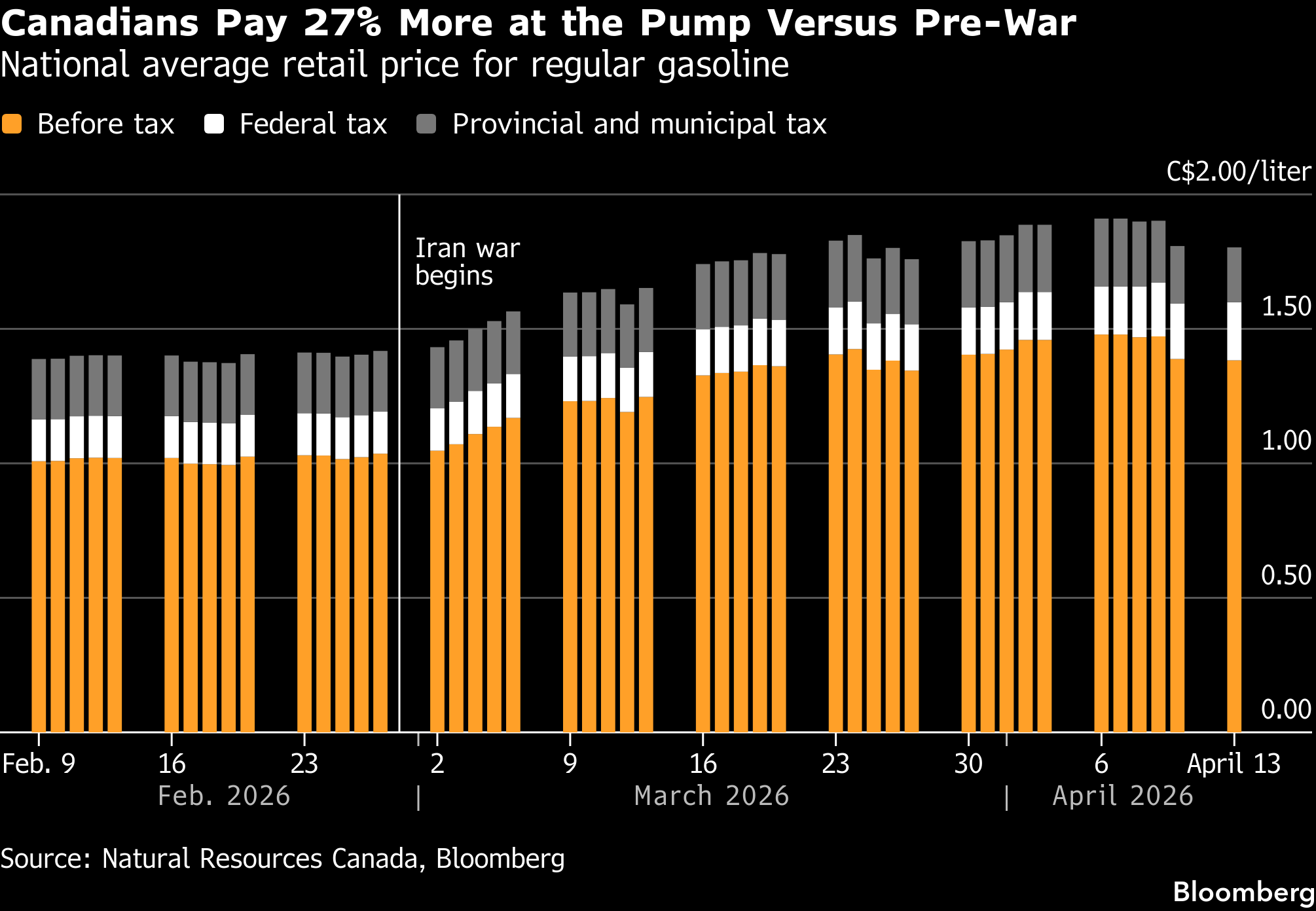
(Bloomberg) -- Prime Minister Mark Carney said he will suspend a fuel excise tax until Labor Day weekend in response to gas prices that have shot up by about 45% in 2026, primarily driven by the Iran war.
Carney described the move as a “responsible, temporary measure” that will lower gas prices by 10 Canadian cents per liter and 4 Canadian cents per liter on diesel. He also pointed to his move to scrap Canada’s consumer carbon tax last year.
“When Canadians are facing financial pressures, they carefully manage their expenses,” he said in prepared remarks. “They expect their government to do the same.”
Carney’s announcement comes a day after his Liberal Party swept three special elections, giving him a majority of seats in Parliament for the first time since he took office about a year ago. That majority allows his government to pass its agenda without needing opposition votes, and lowers the chances of another election in the near future.
It’s the second time this year Carney’s government has used tax measures to try to alleviate the pressure of rising consumer prices. In January he hiked Canada’s goods and services tax credit for a period of five years along with a one-time top-up in June, a move branded as help for grocery bills.
A poll conducted by Nanos Research Group for Bloomberg this month found that cutting fuel taxes was Canadians’ top preference to respond that price hike.
Along with the excise tax, Canadian gasoline also carries an additional 5% goods and services tax. His main political rival, Conservative Leader Pierre Poilievre, has called for all federal taxes on gas to be lifted until the end of the year.
While Carney’s agenda is focused on boosting long-term productive capacity and real wages, he’s faced persistent pressure to provide near-term support to Canadians. Forgone revenue from the fuel excise tax will hit coffers, and the federal government is already set to run a C$65.4 billion ($47.6 billion) deficit this fiscal year.
©2026 Bloomberg L.P.








