

More EV Models Offer Deluxe Backup Power Features For Blackouts

(Bloomberg) -- West Monroe, Louisiana, has experienced some of the nastiest weather in the US of late, but Keith McGrew, who has lived in the rural area for all of his 46 years, was ready.On the third day of a recent blackout, while his neighbors were struggling to find gas for their generators, McGrew was powering almost all of his house with his Ford F-150 Lightning pickup truck. McGrew was even able to fire up his oven to satisfy a pizza craving. “We were like ‘Screw it,’” he explained. “’We got electricity and we can run all day long.’”
As ice, snow and bitter cold stressed America’s power infrastructure in recent weeks, electric vehicles have filled in as emergency power sources, shifting from transportation to 6,000-pound backup batteries for a growing share of drivers.
US drivers have now bought about 630,000 electric cars and trucks capable of discharging electricity — what’s known as bidirectional charging — at levels strong enough to power a home or apartment, according to Cox Automotive and company sales reports. That figure is rising quickly, too. One in five EVs purchased in the past quarter had so-called V2H — or vehicle-to-home capabilities — and analysts say the feature will soon be table stakes for those hoping to sell an electric car.
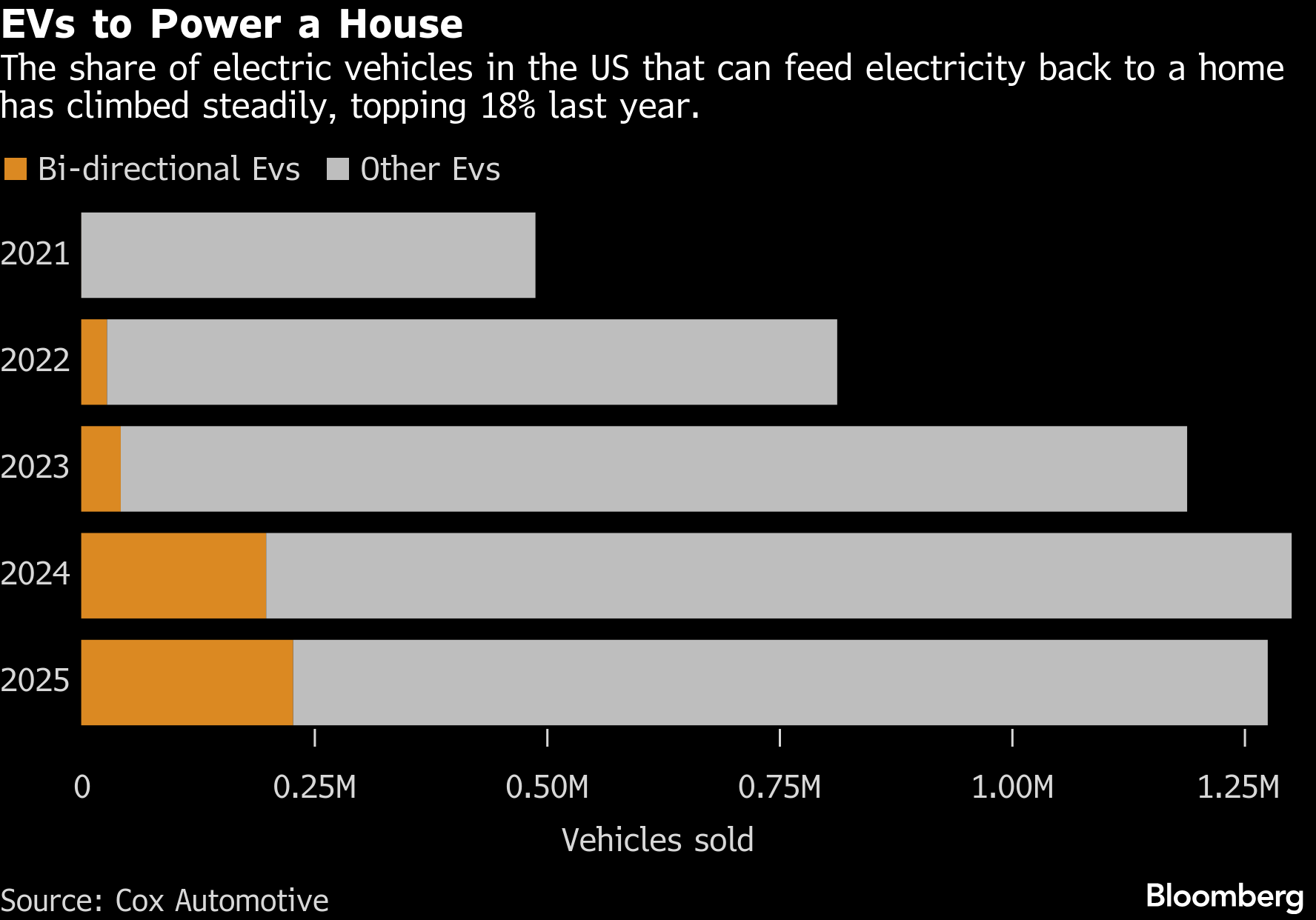
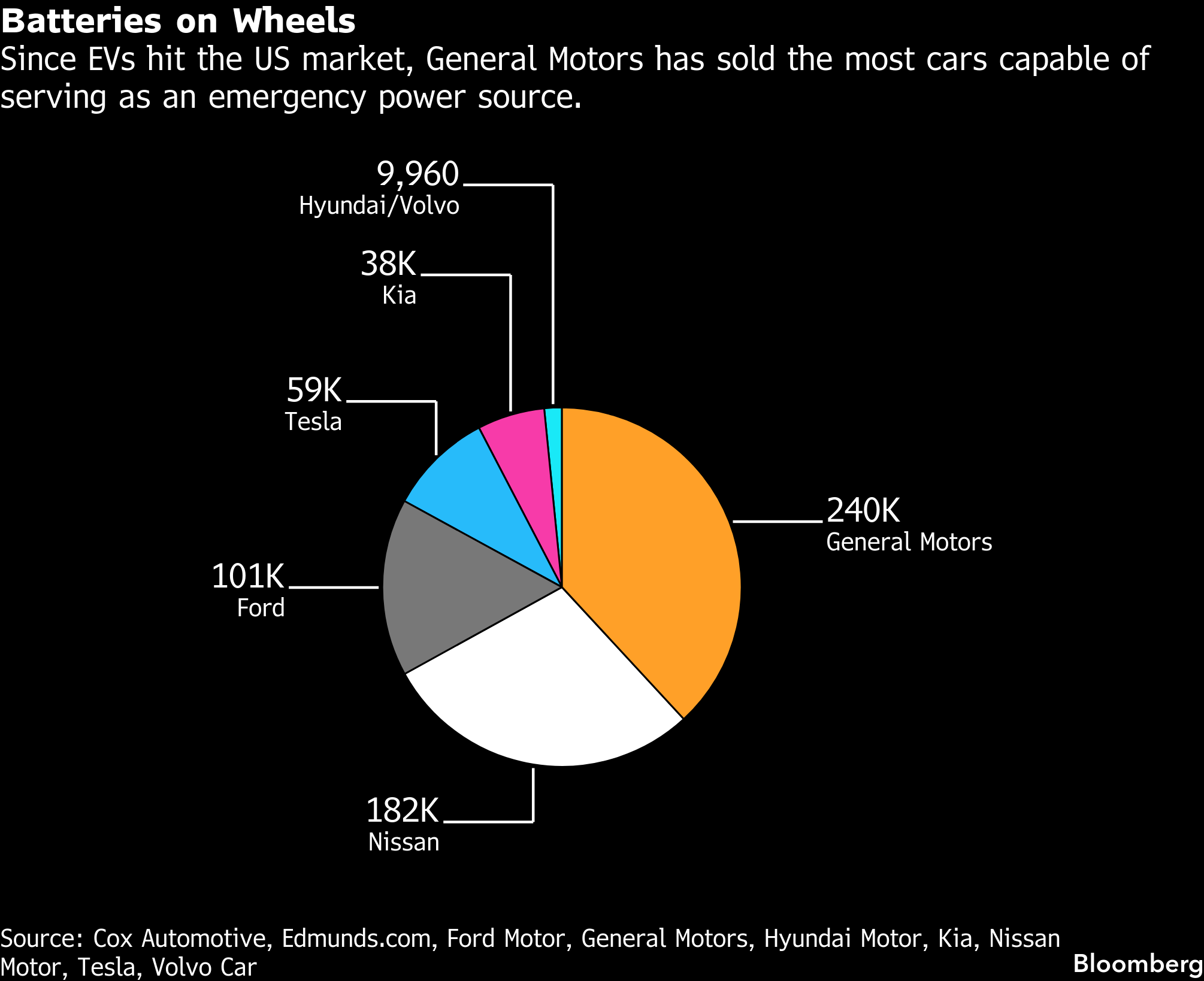
At the moment, about 14 of the 70 or so EV models available in the US offer bidirectional charging. Every auto in the General Motors Co. product line can now power a home in a pinch, as will high-end models from Hyundai Motor Co., Kia Corp. and Volvo Car AB.
That share is likely to climb in coming months. BMW Group has promised bidirectional charging in its new iX3, a pledge echoed by Tesla Inc. for its next Model Y and Rivian Automotive Inc. regarding its R2 SUV expected to hit the market in the next few months.
And although Ford has pulled the plug on its Lightning pickup, there are roughly 101,000 of them in US driveways, many of which have served as tiny power plants during this winter’s brutal weather.
Ford sells a system that connects its vehicles to a home’s electrical panel — a product CEO Jim Farley has crowed about on LinkedIn. The systems, which detect outages and switch power automatically, kick on about four times a year, on average, but last week, as outages hit different parts of the country, Ford said usage quadrupled.
John Halkias was another Lightning owner who was sanguine as more than 18 inches of snow fell on his home in North Canton, Ohio. His 2024 model was fully charged and plugged into his home’s critical systems: the refrigerator, bedroom heaters and the electric dog fence that keeps Ginnie and Bernie, the family’s two doodle mixes, on site.
“It’s a great peace of mind,” Halkias said. “I would say we could keep things going for a minimum of five to seven days with the truck alone.”
To be sure, weathering a storm in an EV takes some planning. It helps to charge in advance and cold weather can slowly sap a battery. Still, in places like rural Louisiana, finding gas in an extended storm can be a challenge, too.
Even the millions of EVs that aren’t capable of powering an entire house are still proving useful. Many contemporary EVs have so-called vehicle-to-load capabilities, which essentially turns the vehicle’s charging port into an electrical outlet. A few years ago, a doctor in Texas famously used his Rivian to power surgical tools for a vasectomy.
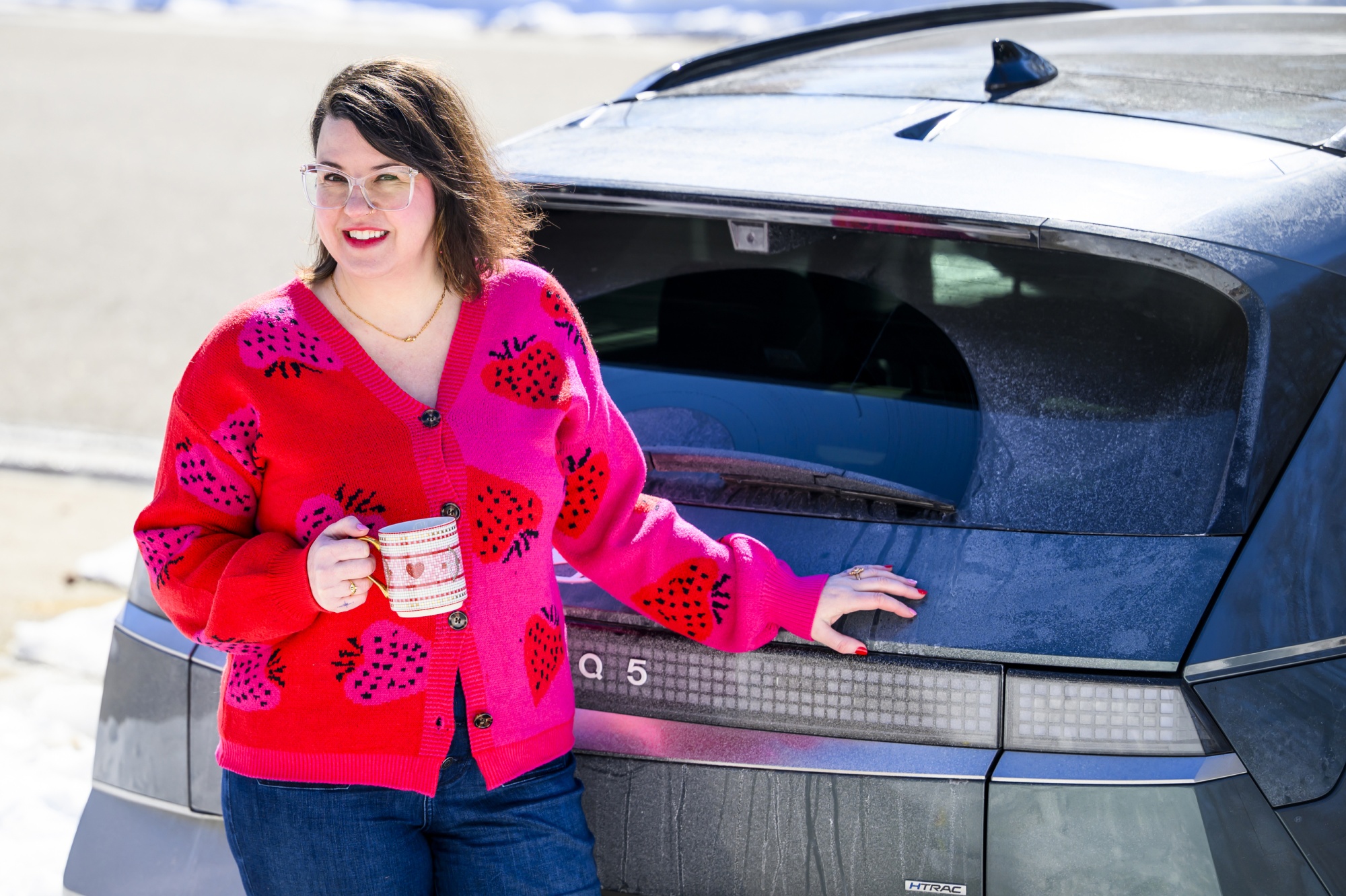
Kim Mestre, a remote worker in Alexandria, Virginia, has simpler needs. Last week, she was planning to use her 2025 Hyundai Ioniq to grind coffee beans and get the electric kettle boiling. “I don’t care about the TV and the food we could put outside,” she said. “For me, it was: Charge my phone and give me coffee, that’s all I really need in life.”
In coming weeks, stories about electric cars keeping lights and heaters on will help unblock some of the hesitation around EVs, said Albert Cabanes, a spokesman for Wallbox NV, which, like Ford, makes chargers that can send power in both directions. “Beyond mobility, the car becomes the largest battery most households will ever own,” he said.
None of this is lost on utility executives and grid operators, who are drawing up plans to tap EVs en masse to shore up power supply on an American grid increasingly stressed by data center demand and extreme weather exacerbated by climate change. GM says these so-called vehicle-to-grid pilot programs are “the future of energy resilience.” Wallbox, in turn, envisions a world where millions of connected EVs take the place of a nuclear power plant.
Back in rural Louisiana, however, McGrew’s Ford remains one of the only EVs in the area. While he has no interest in “saving the planet,” McGrew found himself thinking about solar panels as he fielded texts from his boss, whose diesel generator had run dry, on the fifth day of the power outage.
“I’m feeling smarter every day,” McGrew said, “This afternoon we might go try to wire my truck up to his house.”
©2026 Bloomberg L.P.








