

Canada’s Carney Taps State-Owned Firm to Build Oil Pipeline to Serve Asia


(Bloomberg) -- Trans Mountain Corp., a pipeline operator owned by the Canadian government, has been tapped to build a new export conduit connecting Alberta’s oil sands to a Vancouver-area port, Prime Minister Mark Carney said.
The proposed 1 million-barrel-a-day pipeline will link to a deepwater port capable of receiving Very Large Crude Carriers, or VLCCs, with the goal of “meeting significant Asian demand from countries like Japan, Korea, China and India,” according to the government of Alberta.
The project will largely follow the route of the existing Trans Mountain line, Carney said. That’s the only crude pipeline in Canada that currently reaches an ocean port, limiting Canada’s ability to send oil to markets other than the US.
“Canada and Alberta will be equal partners in this project, and there will be a meaningful ownership stake for Indigenous communities,” Carney said in Calgary on Thursday evening, speaking alongside Alberta Premier Danielle Smith.
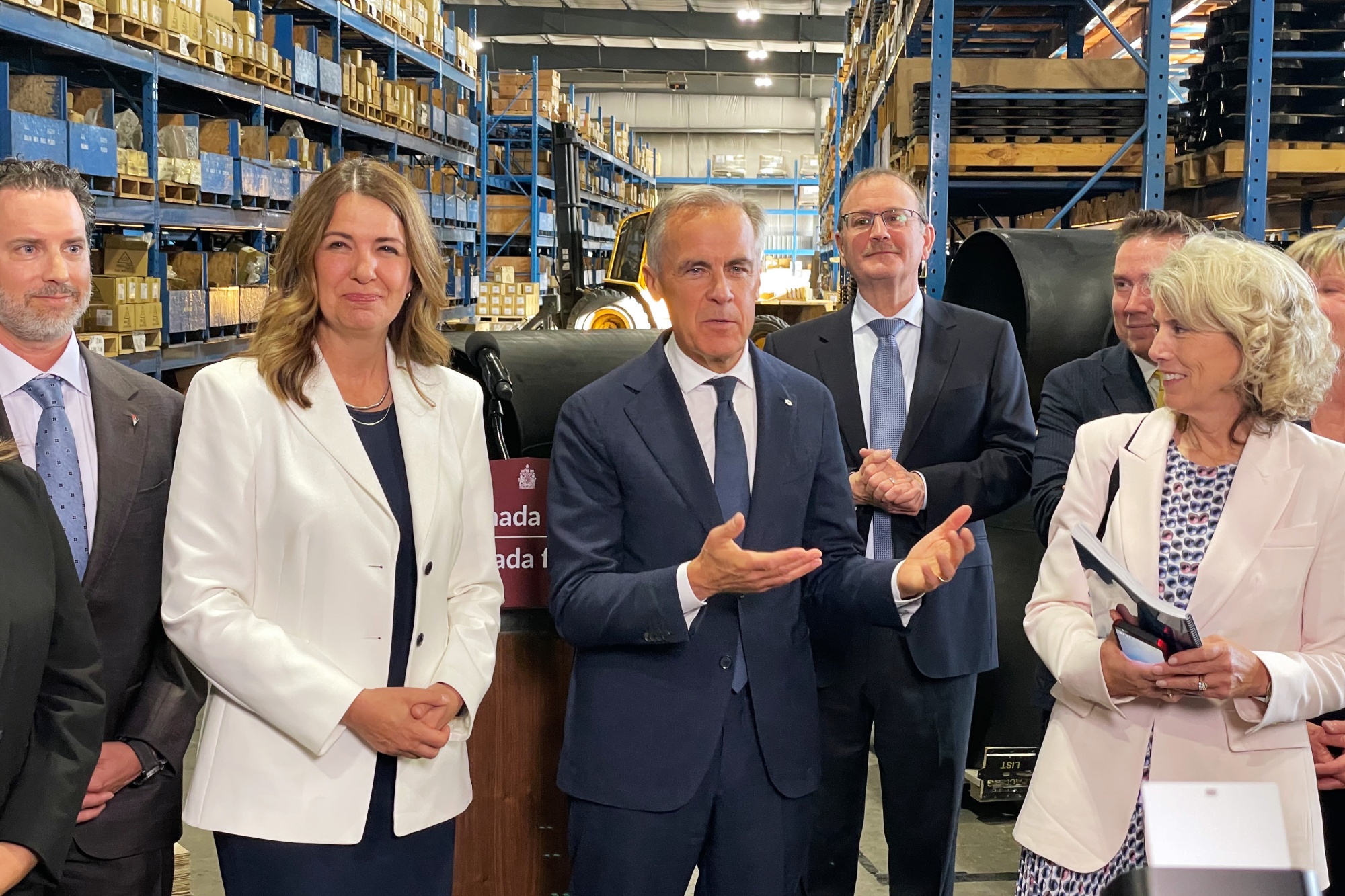
Carney and Smith, while sometimes political rivals, are seeking a shared goal of diversifying Canada’s exports to become less reliant on the US market after President Donald Trump launched a trade war last year.
Dealing with India and China
Selling more oil to growing Asian markets such as India and China will allow Canada to get better prices per barrel, they believe, boosting Alberta’s wealth and helping shield the economy from the protectionism that has defined US trade policy under Trump.
By doing the project through Trans Mountain, the two leaders are effectively providing a government backstop for a complex energy project that is certain to cost tens of billions of dollars. The Alberta government said construction of the project could cost between C$35.2 billion ($24.8 billion) and C$43.7 billion if investment is greenlit in the next three years. But it also forecast the potential to increase Canada’s real gross domestic product by more than 0.6% a year by the 2040s.
Calgary-based Pembina Pipeline Corp. will help build the new line for an initial 10% stake in the project with the option to raise the stake to 20% when the line is operating, as part of a non-bind agreement, it said in a statement. The project has now been submitted to the federal Major Projects Office for review — a process that may qualify it for faster regulatory approval.
Implementing CCS technology
The prime minister also said terms have been reached with the largest Canadian oil sands companies to move forward on Pathways, a large carbon capture system. Carney had said the project to reduce energy-sector emissions was a condition of his government’s backing of a new oil pipeline.
Kendall Dilling, president of the Oil Sands Alliance, which represents the five major oil sands firms, said they agreed to a 2032 start date for the Pathways project and construction would begin later this decade.
“No one party got everything they wanted, it’s just not how this works,” Dilling said in an interview. “But at the end of the day, everybody was committed to what needed to happen and we found a middle ground.”
The proposed third line for Trans Mountain isn’t the only expansion coming for Alberta’s oil producers. Enbridge Inc. and Trans Mountain are planning expansions equal to about 700,000 barrels a day in the next few years. At the same time, South Bow Corp. is teaming up with Bridger Pipeline LLC on a proposal for a new 550,000 barrel-a-day line to the US that’s akin to a smaller version of the canceled Keystone XL project.
“I think you’ll see as we get this MOU finalized and through final drafting and approvals, companies will be incentivized to move quickly to grow production,” Dilling said. “So I don’t think we’ll be waiting around for years to see companies starting to invest real dollars.”
Trans Mountain Chief Executive Mark Maki said in an interview that an open season would be needed to get commitments from producers before a final investment decision was made, and he expected that process to happen next year.
Persisting challenges
The choice of a route through southern British Columbia, and into Canada’s third most-populated metropolitan area, is a reversal for Smith, who had repeatedly said she preferred a northwestern route because it would shorten the shipping time to Asia.
But earlier on Thursday, Carney and BC Premier David Eby announced a federal ban on oil tankers along the northern BC coast would stay in place with no exceptions. The federal government also announced billions in funding for energy, mining and transportation projects in BC.
That deal removed a major hurdle to building a new pipeline, as Eby said his government won’t challenge Alberta’s new proposal in court. He had been steadfast in opposing a northwestern route and lifting the oil tanker ban.
Setting financial structures
“This agreement doesn’t require us to support any pipeline proposal from Alberta,” Eby said. “However, as I’ve said before, we recognize our constitutional position, and we do not have the authority to stop a new pipeline. We will not be going to court to fight a pipeline project.”
The BC deal also outlined plans for a legal framework that would see the province share in the economic upside from the new pipeline, including a potential annual royalty payment from the operator and the creation of an environmental liability and emergency response fund.
Carney also promised his government’s support for upgrading the Roberts Bank port south of Vancouver, which is the proposed end point for the pipeline.
The existing Trans Mountain marine terminal in Burnaby, British Columbia, can only receive partly-full Aframax tankers, which carry less than half the amount of oil of VLCCs. The ability to ship oil on VLCCs would improve the economics of shipping western Canadian oil to distant destinations such as India.
(Updates with reaction from 10th paragraph.)
©2026 Bloomberg L.P.