

Exxon’s Truth-Telling on Venezuela Shows Risk of Crossing Trump

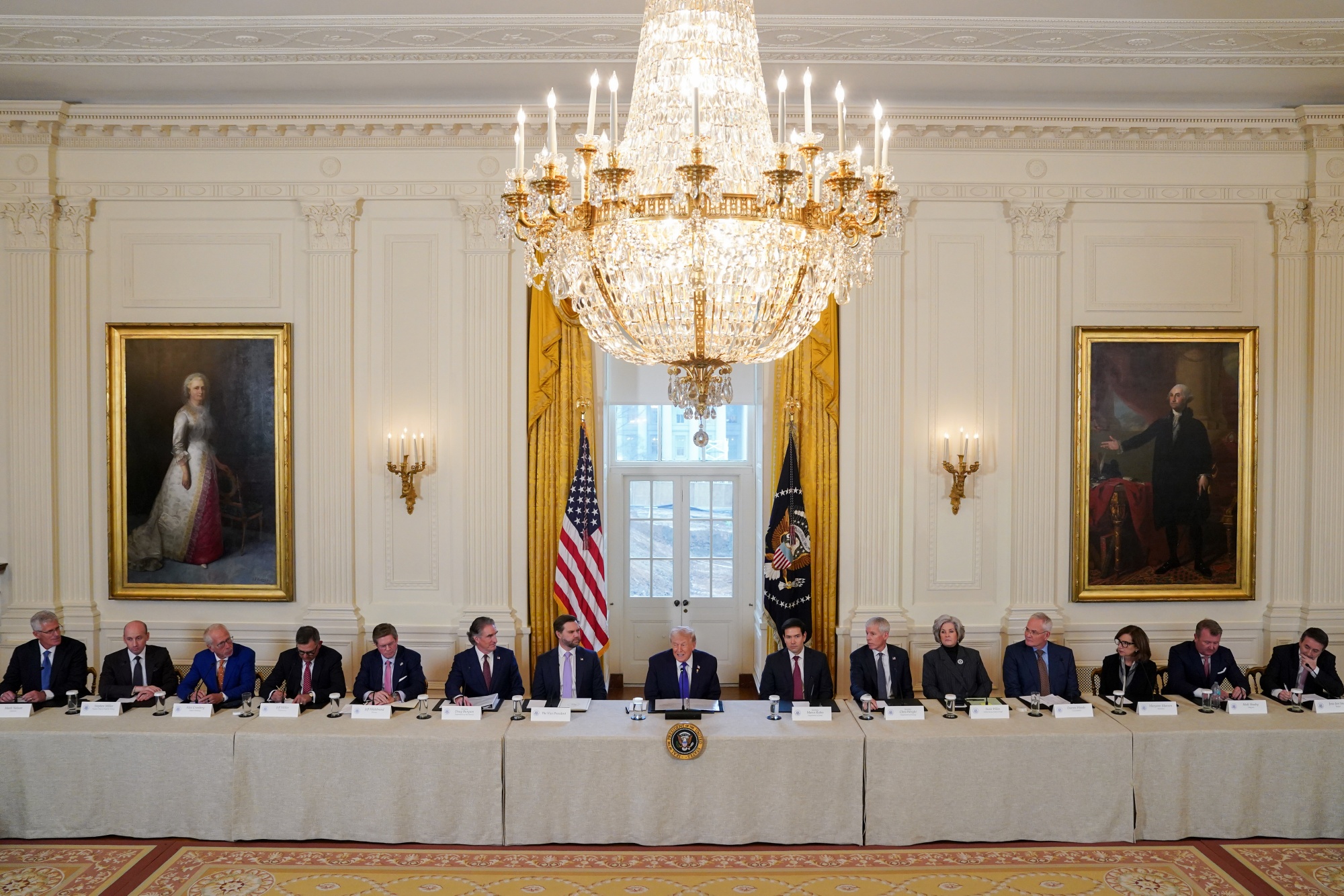
(Bloomberg) -- When Exxon Mobil Corp. Chief Executive Darren Woods told President Donald Trump Friday that Venezuela is currently “uninvestable,” he was echoing warnings already issued by oil industry leaders and analysts.
Indeed, some of his peers had tried to dissuade the White House from even holding the meeting, according to people familiar with the matter.
While Trump wants US companies to invest at least $100 billion rebuilding Venezuela’s beleaguered oil sector following the capture of President Nicolás Maduro, some executives worry conditions won’t permit a speedy turnaround. They also don’t want their companies cast as opportunistically dividing up Venezuela’s vast crude reserves, believed to be the world’s largest, the people said.
Woods not only attended the meeting of roughly 20 oil industry executives, he spoke his mind. But Trump didn’t appear to appreciate the candor. By Sunday evening, the president was telling reporters he “didn’t like” Woods’ remarks and was inclined to keep Exxon out of Venezuela, saying, “They’re playing too cute.”
“Woods thought he was speaking the truth — and he probably was — but he didn’t read the room,” said Andrew Logan, oil and gas senior director at the CERES climate advocacy nonprofit, who speaks regularly with oil industry investors. “He wasn’t in a position to say that without blowback, and blowback is what he got.”
It was a fresh reminder of the potential pitfalls for the leaders of any company — or country — when summoned to Trump’s White House for a meeting. The president is fond of opening some sessions up for public viewing, giving him a platform to extract concessions from gathered executives or government leaders.
Oil executives, however, have reason to be cautious about Venezuela.
Any bid to significantly boost the country’s recent oil production of nearly 1 million barrels per day — much less reach 1970’s peak of close to 4 million barrels daily — would likely require tens of billions of dollars. Companies would have to rebuild or replace abandoned rigs, leaky pipelines and fire-ravaged equipment. Even beyond the physical challenge, industry representatives say they want to see political and legal reforms enabling them to move money in and out of the country as well as on-the-ground security before they make any big commitments.
“The industry was unified on Friday — with the meeting with the president — that there are going to be certain prerequisites that have to happen before there’s continued investment in Venezuela,” Mike Sommers, CEO of the American Petroleum Institute, told reporters Monday.
Exxon’s arch-rival Chevron Corp. remains, for now, the only major international oil company operating in Venezuela.
Exxon executives were taken aback by the media’s reaction to Woods’ comments — according to a person familiar with the company’s thinking — given he also told Trump the company was planning to send an assessment team if invited by the Venezuelan government. In addition, Woods expressed confidence the Trump administration could deliver the legal and regulatory reforms needed for any future investment.
Despite Trump’s negative response, administration officials took note of the changes Woods recommended, said people familiar with the matter who asked not to be named because the conversations were private. A White House official pointed to the president’s Sunday remarks when asked to comment. Exxon declined to comment beyond Woods’ remarks on Friday.
Woods has become more strident in his public comments in recent years, speaking forcefully in pursuit of his policy goals even when it risks unpopularity with politicians, the media and investors. It’s a departure from former CEO — and Trump’s former secretary of state — Rex Tillerson, who tended to be more conservative in his approach to the company’s image.
“They’re gone from seeing silence as a source of strength to seeing silence as weakness,” Logan said. “It’s been a dramatic shift.”
When Europe was considering new climate and human rights laws last year, Woods was among the first high-profile CEOs to attack them directly. He also pushed back on Trump’s plan to pull the US out of the Paris climate agreement, arguing it would forfeit the chance to press for “common sense” carbon-cutting policy on the world stage.
Most strikingly, Woods took Chevron to international arbitration after its competitor agreed to buy Hess Corp., a deal that would secure a 30% stake in Exxon’s prized oil development off the coast of Guyana, next door to Venezuela. Exxon lost, as most analysts expected, but the case left Chevron in strategic limbo for more than a year. Woods defended his decision to pursue it, saying his company would always seek to protect shareholder rights.
For now, there are no signs the Trump administration will actively dissuade Exxon’s involvement in any Venezuelan reconstruction, should the company choose to pursue it.
As one of the Western oil majors with experience in the country — having left after billions in assets were seized by the government — Exxon is viewed as well-positioned to help. Most of Venezuela’s oil is heavy and sour, making it technically challenging to produce. That could constrain some of the independent oil companies that were more bullish at the White House meeting.
Trump told reporters after Friday’s meeting that “we sort of formed a deal.” But pressed to identify any specific commitments, Energy Secretary Chris Wright pointed to Chevron’s plan to increase its Venezuelan production by roughly 50% over the next 18 to 24 months as the “one specific pledge” from an oil company.
©2026 Bloomberg L.P.