

Ground Beef Prices Targeted With New Trump Tariff Relief


(Bloomberg) --
President Donald Trump said he would allow tariff relief for some ground beef imports in a bid to lower prices for American consumers, a key concern ahead of November midterm elections.
“Today, I concluded a deal to substantially lower the price of ground beef for working American families,” Trump said in a social media post Friday.
The president said that “for the next 90 days, the United States will allow up to 300,000 metric tons of product for ground beef to be imported with no out of quota tariff. We have a commitment that this beef will be sold at 25 percent below current market prices.”
Trump did not provide any further details on the deal, including on the source of those imports.
The president will sign an executive order within the next two weeks to ease tariffs, according to a White House official who detailed the plans on condition of anonymity. The official said that in exchange for tariff relief, foreign beef exporters had agreed to provide a 25% discount and that those savings would be passed on to American consumers.
The official did not provide more information on how that arrangement would be implemented or identify the specific tariffs the order would target. The US allows some countries to ship a certain amount of tariff-free beef each year, with supplies past that subject to higher levies.
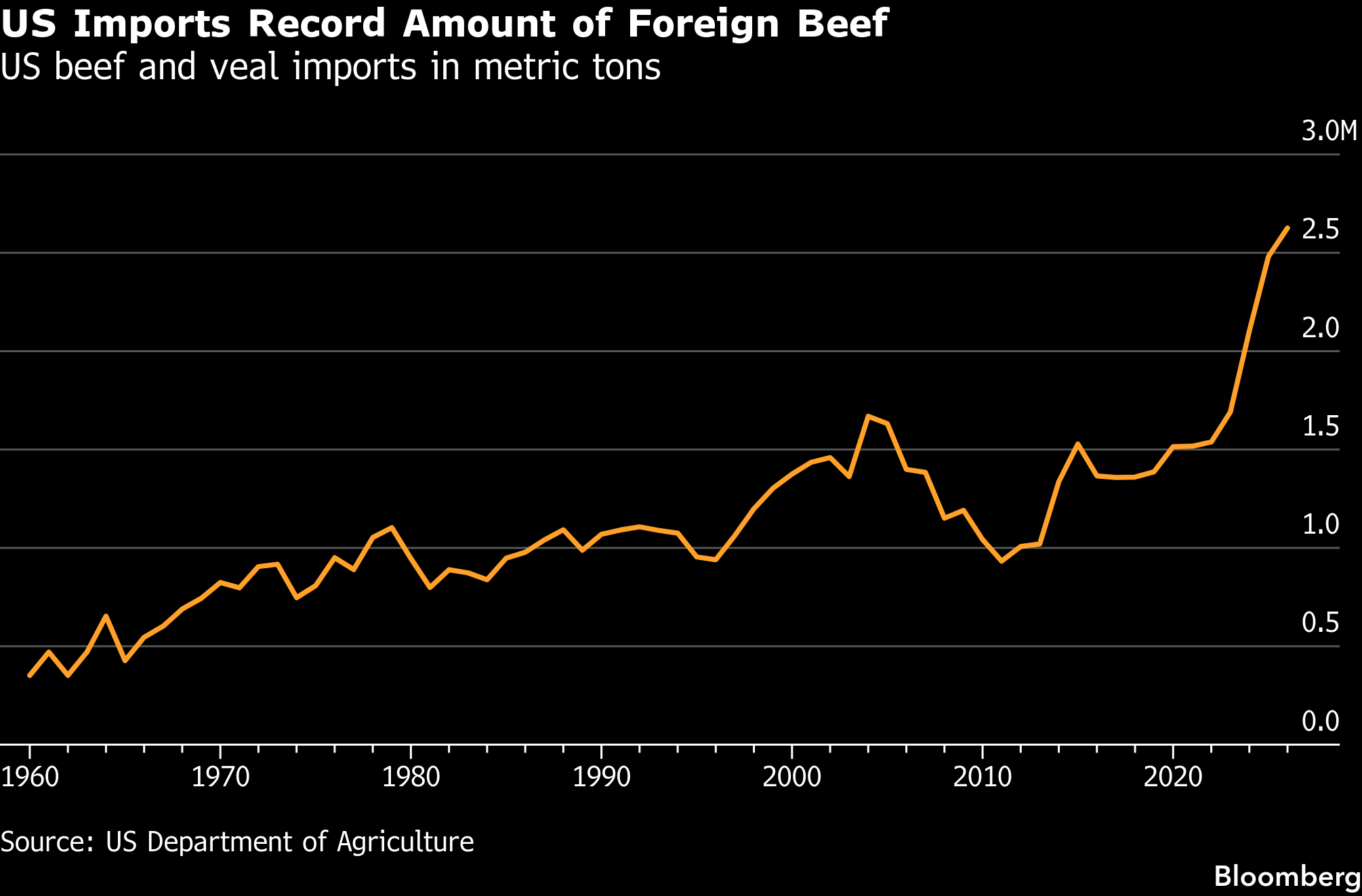
The move on imports — which amounts to about 2% of the US’s roughly 13 million ton annual domestic consumption — is the president’s latest attempt to tamp down beef prices, which have skyrocketed amid a deep US cattle shortage, as higher production costs and dry pastures have made it more difficult for ranchers to raise animals.
Uncertainty — whether over drought, production costs or input prices — is a key reason that ranchers have hesitated to rebuild their herds, as selling off animals promises immediate returns, while retaining them for breeding is a yearslong financial commitment. The latest move doesn’t address that issue, and in fact could deter American ranchers by pressuring prices. Live cattle futures traded in Chicago dropped as much as 2.4% to the lowest price since last November.
“Today’s announcement and other market interventions throw cold water on the prospect of herd expansion and sacrifices long-term stability for short-term messaging,” the National Cattlemen’s Beef Association said in a statement, adding that markets have “already turned sharply lower” at a critical time of year for ranchers trying to make decisions regarding their herds.
The Meat Institute, which represents processors, declined to comment.
Shares in Brazilian meatpacker MBRF Global Foods Co. and Minerva SA jumped to the highest intraday price since April and May, respectively, while US shares of Brazilian-owned JBS NV also rose. Shares of the US’s largest meatpacker, Tyson Foods Inc., were slightly down.
Trump has previously sought to increase beef imports, including boosting the amount that Argentina could ship under lower tariffs. The US Department of Agriculture earlier this month projected imports accounting for a record share of US beef supplies this year.
Upcoming elections to determine control of Congress are likely to hinge on voter perceptions of the economy, with rising costs for groceries, healthcare, utilities and housing taking center stage. Prices for staples such as beef, eggs and gas play a particularly outsized role in how consumers perceive inflation.
Polls show Trump’s Republican Party facing an uphill battle to keep control of Congress, with voters unhappy with the president’s handling of the economy and the Iran war, which has spiked prices at the pump.
There are signs that Americans are reaching their limit on rising beef prices. Beef sales volumes in the 13 weeks ending in mid-July, a crucial stretch encompassing both Memorial Day and July Fourth, fell 0.3% from a year earlier, according to research firm Circana. That compares with about 5% growth in the previous two years.
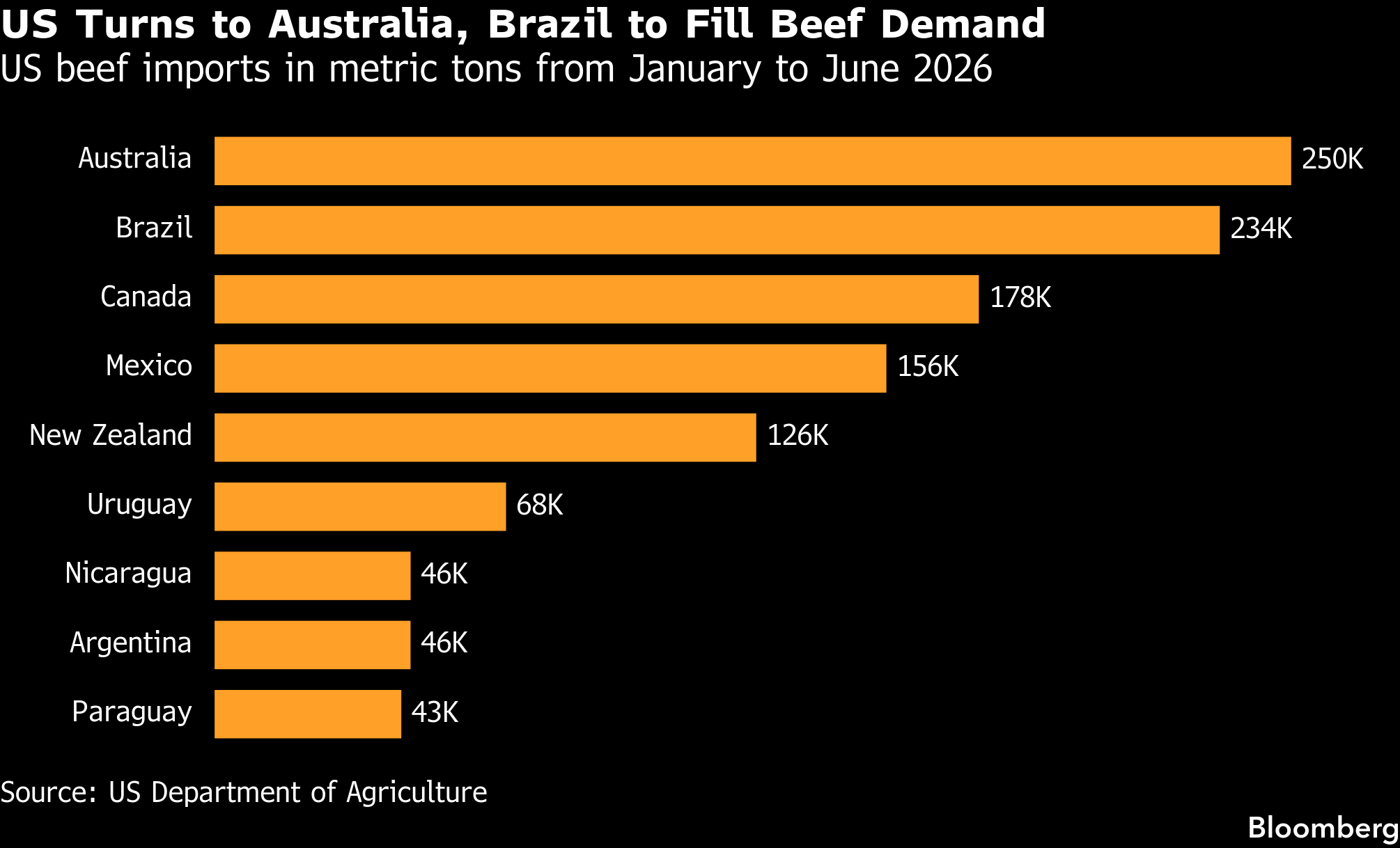
The top sources of US beef imports in the first half of the year were Australia and Brazil, according to the US Department of Agriculture. Shipments from Argentina more than doubled in the first half of 2026 compared to the prior year. Foreign supplies tend to be of leaner beef trimmings, which are blended into fattier US products to achieve the right fat-lean ratios for ground meat.
In addition to importing more meat, the US is also poised to resume live cattle imports from Mexico, which had been largely halted for over a year due to the spread of a cattle parasite. That trade has been touted by meatpackers as a major immediate way to address near-term prices, potentially allowing over a million cattle a year back into the US. Still, those shipments are initially set to enter only one Arizona port, amounting to a small share of supply.
The White House’s actions come as early signs that US herds are rebuilding are still too weak to provide any immediate reprieve. Beef processors, squeezed by the rising cost of cattle, have had to close plants to reduce competition for scarce animals, including a move announced last week by Tyson Foods Inc.
(Updates to add White House official starting fifth paragraph, additional context throughout)
©2026 Bloomberg L.P.