

Tanker Blockade Spurs New Legal Questions on Venezuela Campaign

(Bloomberg) -- Leia em português
For months, legal experts and members of Congress have questioned the legality of President Donald Trump’s military campaign against alleged narco-terrorists off Venezuela and Colombia. A new blockade on oil tankers compounded those concerns.
Trump announced a “total and complete blockade” of sanctioned oil tankers going to and from Venezuela on Tuesday, prompting an immediate question: was it an act of war against President Nicolas Maduro’s government?
For the time being, the answer appeared to be that the president was just skirting the edge of such a distinction by focusing on one type of vessel, not all of them. That makes it a “quarantine,” which is legally distinct from a full blockade.
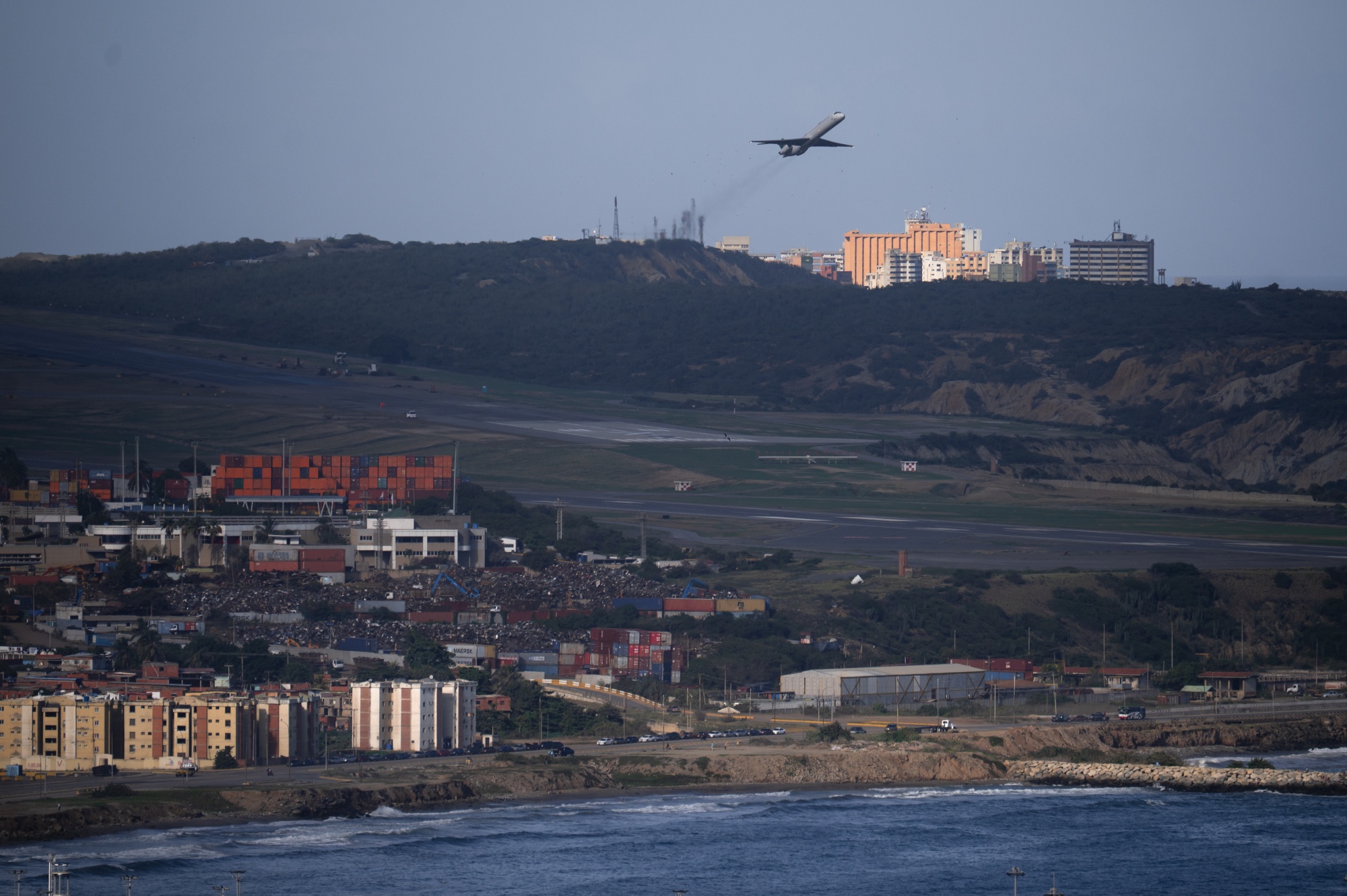
But the lines around the matter aren’t exactly clear, and the move only fanned concerns about the Trump administration’s rationale for the campaign in the Caribbean and eastern Pacific Ocean. The administration has argued that narco-traffickers pose an imminent threat to the US and the military is at war with them, thus allowing for the aggressive action.
“A lot of stuff with a maritime force is very fungible,” said Steven Wills, a former Navy officer now at the Center for Maritime Strategy think tank. “Right now this is a classic use of selective maritime action to pressure the Maduro regime.”
The legal concerns reached a new pitch in recent weeks after reports emerged that US military planners overseeing a Sept. 2 attack on one alleged narco-trafficking boat had ordered a second strike to kill survivors of the first. That prompted accusations of war crimes, congressional hearings and calls for Defense Secretary Pete Hegseth to release unedited video footage of the attack — something he’s so far refused to do.
Then Trump ordered the seizure of a sanctioned oil tanker off the Venezuelan coast. The Venezuelan government characterized it as “blatant theft” while Maduro called it a “criminal and illegal act.”
The White House didn’t respond to a request for comment on the legality of the blockade. But several officials have justified it on the grounds that Venezuela had nationalized the assets of US-based oil companies in the past.
“You remember they took all of our energy rights,” Trump said after announcing the blockade. “They took all of our oil not that long ago. And we want it back. They took it — they illegally took it.”
US lawmakers, some of whom are angered over Trump’s bypassing of Congress’s War Powers Act role in approving US participation in conflicts, have pressured Hegseth to be more transparent — in part by threatening to curtail his personal travel budget.
Since coming into office for his second term, Trump’s critics say the president hasn’t let norms or laws stand his way. And he has also approached issues of war and peace in the same manner that he’s torn down government agencies, slashed foreign aid and slapped tariffs on foes and allies alike — moving quickly and forcefully despite political opposition or legal challenges.
The steadily more aggressive campaign in South America is testing the limits of Trump’s legal authority and may be in violation of both international and US law, according to Yale Law School professor Harold Koh, who served as State Department legal adviser in the Obama administration.
“Under domestic law, he has no authorization from Congress to take these war-like steps against Venezuela,” Koh said. “And he also has no basis for a self-defense rationale.”
When asked on Thursday if he would seek authorization from Congress for land strikes against Venezuela, Trump said: “I wouldn’t mind telling them, but you know it’s not a big deal — I don’t have to tell them, it’s been proven.”
Trump’s defenders say that the sheer scale of the fentanyl-fueled US opioid crisis, which has killed tens of thousands of Americans, justifies war-like moves against drug cartels.
“The president has every bit of Article 2 authority to defend the United States of America from these imminent threats — these cartels that are doing this are an imminent threat,” House Foreign Affairs Committee Chairman Brian Mast said on Wednesday. “These cartels have tens of thousands of members who wake up every day and see it as their sole mission to flood the United States with lethal drugs.”
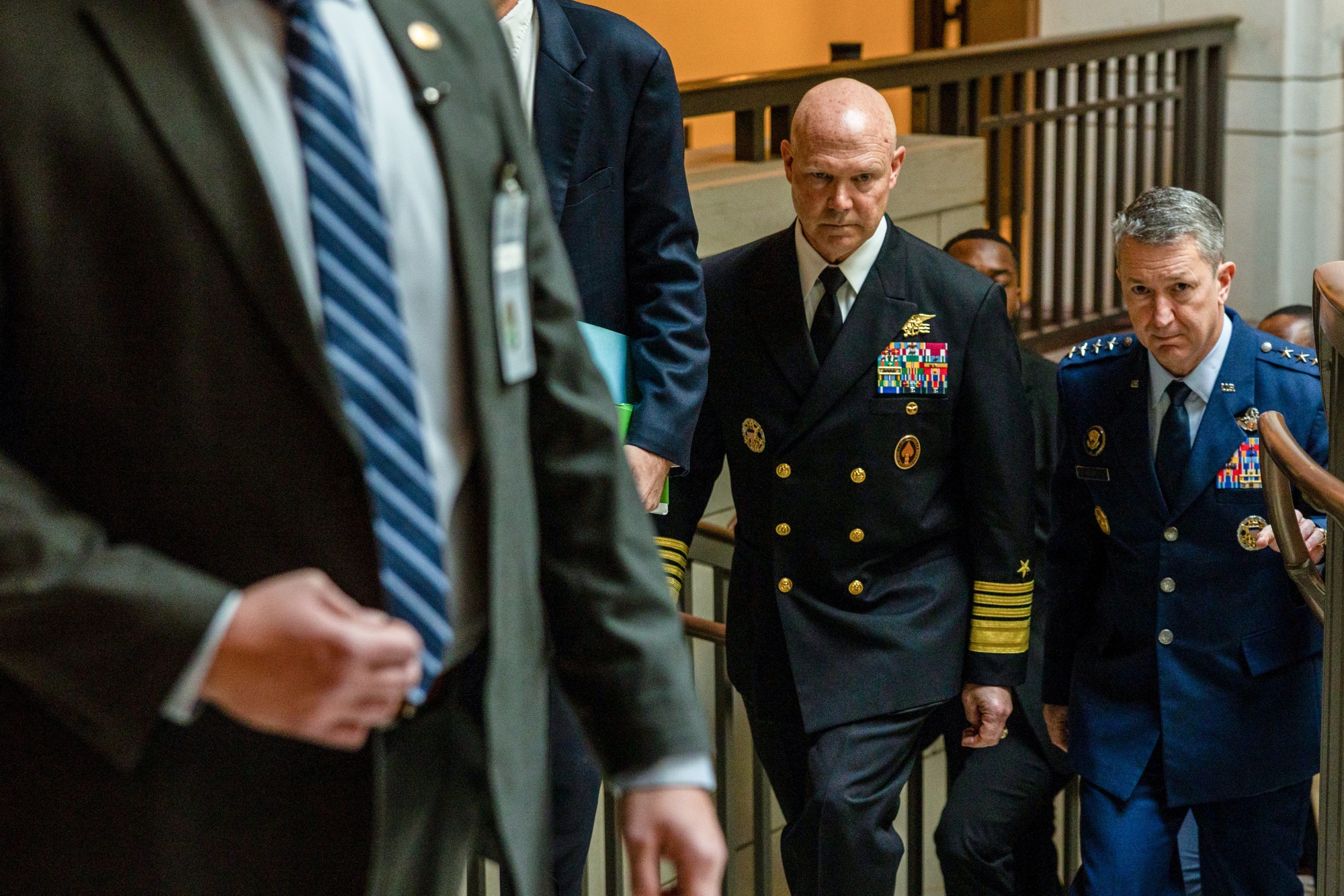
Some legal experts suggest that even Trump’s social media post threatening to use force is a violation of Article 2 of the United Nations charter, which bars threats and force.
Trump’s actions already drew a veiled and gentle rebuke from United Nations Secretary General Antonio Guterres, who spoke to Maduro by phone about “current tensions in the region” and issued a statement Wednesday calling on member states “to respect international law” and the UN charter.
“We are talking about a blockade during peacetime, and there’s a pretty fair consensus that if state A declares a blockade of state B during peace time, that’s what’s known as an act of aggression,” said Michael Schmitt, an international law professor at the University of Reading.
Still, he said he wasn’t ready to say that the US had entered open conflict with Venezuela with its operation, dubbed Southern Spear.
“I don’t think we’re quite there yet, but if the Southern Spear vessels, warships, begin to stop ships, use force, fast rope onto boats, seize them, then we’re there,” Schmitt said.
©2025 Bloomberg L.P.