

Kuwait Cuts Oil and Refining Output as Hormuz Stays Blocked

(Bloomberg) -- Kuwait, OPEC’s fifth-biggest producer, reduced oil and refinery production following the slowdown of shipping traffic through the Strait of Hormuz, the latest in a string of output reductions that hit some of the world’s biggest energy producers.
The cuts follow the “ongoing aggression by the Islamic Republic of Iran against the state of Kuwait, including Iranian threats against safe passage of ships through the Strait of Hormuz,” Kuwait Petroleum Corp. said in a statement. The cutback started Saturday with 100,000 barrels a day and is likely to increase gradually depending on storage levels, a person with direct knowledge of the plan said.
The reductions add to the list of energy supply cuts in countries across the Persian Gulf, which have helped drive oil prices in London to the highest close in more than two years at almost $93 a barrel. Iraq started holding back production earlier this week as the near-halt of shipments through Hormuz started filling up storage tanks, while Saudi Arabia shut its biggest refinery and Qatar closed the world’s largest liquefied natural gas export plant after drone attacks.
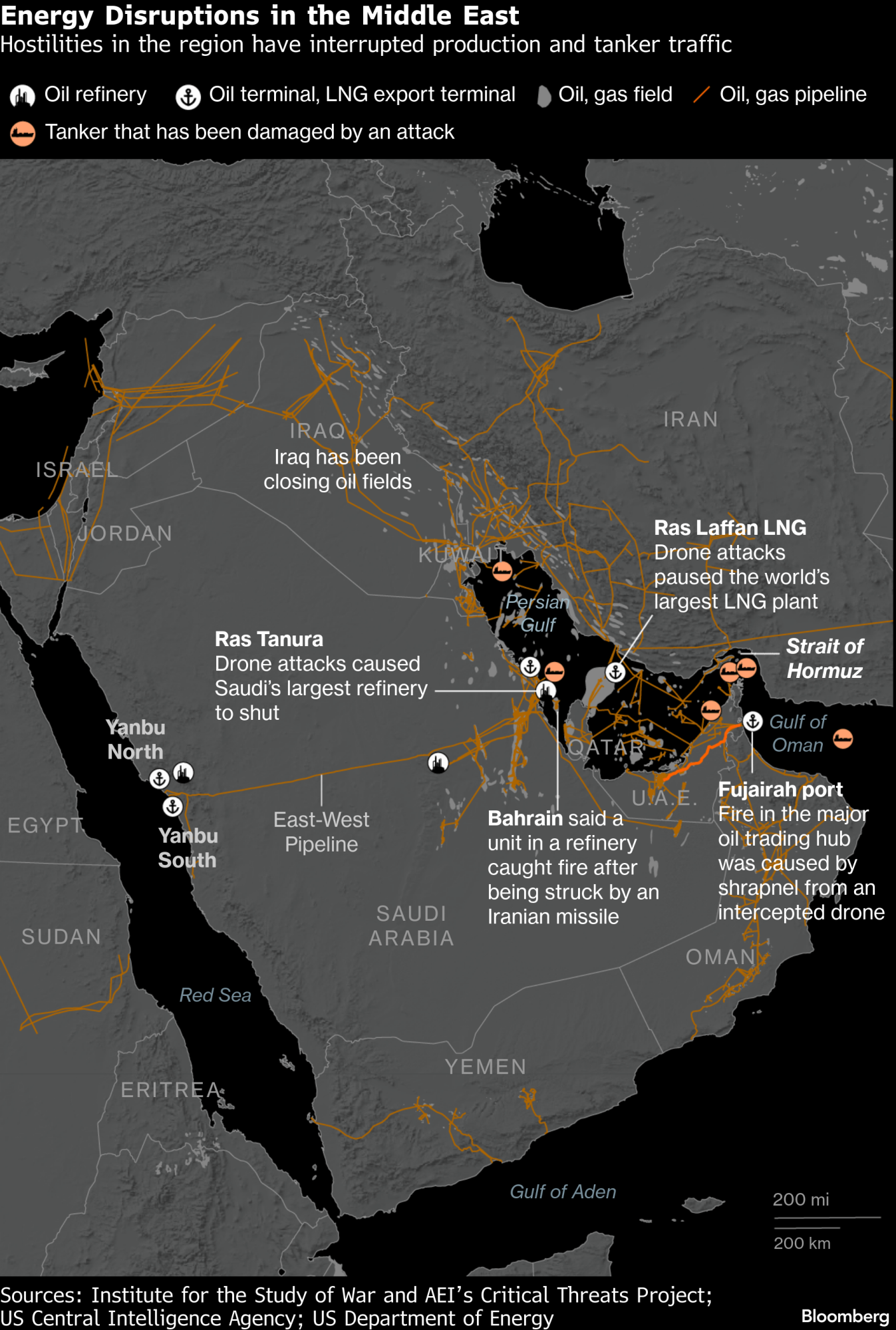
Kuwait produced about 2.57 million barrels a day in January, according to data compiled by Bloomberg. The only route out for the country’s oil is through the Strait of Hormuz. Saudi Arabia, the biggest producer in the region, has diverted some of its supply away from this route toward Yanbu in the Red Sea.
Kuwait also began lowering processing rates at its refineries in the aftermath of the war in the Middle East with storage sites filling up. The nation’s refineries — Al-Zour, Mina Al-Ahmadi and Mina Abdullah — have a combined capacity of about 1.4 million barrels a day. Al-Zour is one of the biggest oil-processing facilities in the Middle East.
(Updates with cutback volume in the second paragraph.)
©2026 Bloomberg L.P.








