

Guyana Plans ‘Norway on Steroids’ to Avoid Oil’s Resource Curse

(Bloomberg) -- Oil-rich Guyana is spending so heavily and quickly on diversifying its economy that it’s on the cusp of becoming a “Norway on steroids,” according to President Irfaan Ali.
The South American nation, where Exxon Mobil Corp. discovered oil in 2015, has quadrupled its national budget over the last five years to fund new roads, bridges, schools and power generation as well as cash handouts to citizens. It’s part of an aggressive — and potentially high risk — plan to use revenue from Exxon-operated offshore projects to reduce dependence on crude as quickly as possible.
“For 25 years Norway used all of its resources to build out the systems, the infrastructure, and the investment in human capital and technology to be where they are,” Ali said during an interview at the Guyana Energy Conference in Georgetown on Wednesday. “If you look at where we are today and the type of investment we have made in terms of education, technology, I think we are Norway on steroids.”
Previously among the poorest countries in the Americas, Guyana has increased its gross domestic product five-fold since Exxon began pumping crude from its vast discoveries in 2019. With less than 1 million people, it recently became the world’s biggest oil producer per capita. Other oil-rich countries like Venezuela, Nigeria and Angola have shown that a sudden increase in commodity wealth can spur inflation and corruption while crowding out other economic sectors, a phenomenon known as the resource curse.
Ali, who won a second five-year term in 2025, wants to avoid that through a multi-pronged spending plan to develop non-oil sectors. He’s targeting agriculture and mining as industries where Guyana could grow into producing higher-value products like packaged food and aluminum rather than the raw materials it has sold in the past.
The president also wants to bring natural gas onshore from the Exxon-operated oil fields to be used in power generation and manufacturing while also transforming Guyana into a regional hub for data centers and eco-tourism.
“We have to work on all of these pillars and platforms at the same time because we are behind time,” said Ali, 45. “We have to have economic diversification at a scale and speed that would allow us to de-risk other sectors and have the maximum multiplier effect on the economy.”
The changes in the capital city Georgetown are palpable.
A towering, 1.6-mile (2.7 kilometer) cantilever bridge recently opened over the Demerara River to link the country’s east and west regions. Cranes tower over the city building new hotels and retail outlets. Construction vehicles and diggers barrel around narrow streets past wooden Colonial-era buildings.
Oil field service yards filled with heavy equipment under gleaming white lights have replaced palm groves. Venezuelan and Cuban immigrants are flocking in to fill job vacancies, especially in construction.
But Guyana has a long way to go before it can fulfill Ali’s vision.
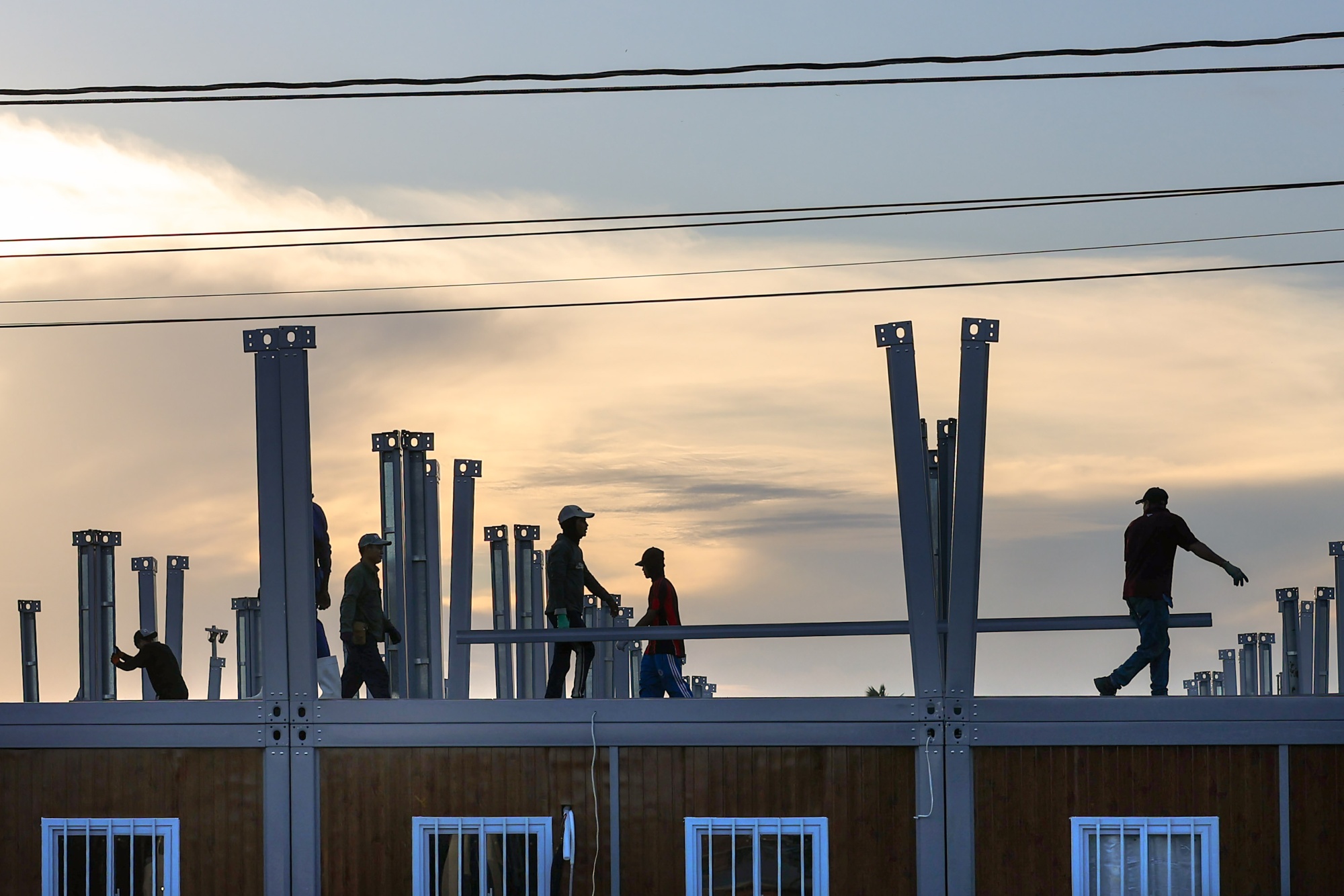
The public sector minimum wage is still only $478 a month, even after rising 37% since 2021. Food and housing costs are up sharply. Electricity is among the most expensive in the region and blackouts are still common. Oil production, exclusively from the Exxon-operated development, now accounts for 75% of the economy.
Ali wants to increase eco-tourism in a country with millions of acres of unspoilt rainforest, waterways and wildlife. That’s going to require airports, roads and other infrastructure, he noted.
Guyana drew down nearly all the inflows into its sovereign wealth fund last year while debt is rising. The fund had about $3.4 billion as of Dec. 31, about half the amount Exxon and its partners have paid in since 2019. The government plans to spend about $7.5 billion this year, with a focus on roads, housing, health and education.
So far, spending hasn’t always yielded results. A 300 megawatt natural gas-fired power plant near Georgetown is more than two years behind schedule and its budget has swelled to around $2 billion, despite oversight and support from the US Export-Import Bank.
Still, Ali is convinced Guyana will avoid the resource curse.
“We have gone in the opposite direction,” he said. “I will say, in a humble way, that Guyana has demonstrated to the world that we have created a model of utilization of oil revenue to propel growth, advance wealth, and develop human capital.”
©2026 Bloomberg L.P.