

Thailand to Shift From LNG Toward Renewables in Wake of Iran War


(Bloomberg) -- Thailand plans to shift away from imported gas and embrace renewables and nuclear power as it seeks to build an energy system that’s less vulnerable to external shocks like the Iran war.
The Southeast Asian nation aims to generate 60% of its electricity from clean energy sources like solar, wind and hydro in 25 years time, said Energy Minister Akanat Promphan. That’s double the previous goal. The targets will be officially announced in an updated 25-year national power plan to be released in October, Akanat said.
“The ongoing conflict in the Middle East demonstrates that we must urgently reduce imports of LNG and other fuels,” he said in an interview at the Thai parliament late on Wednesday. “We need to build a cleaner and more self-reliant power system.”
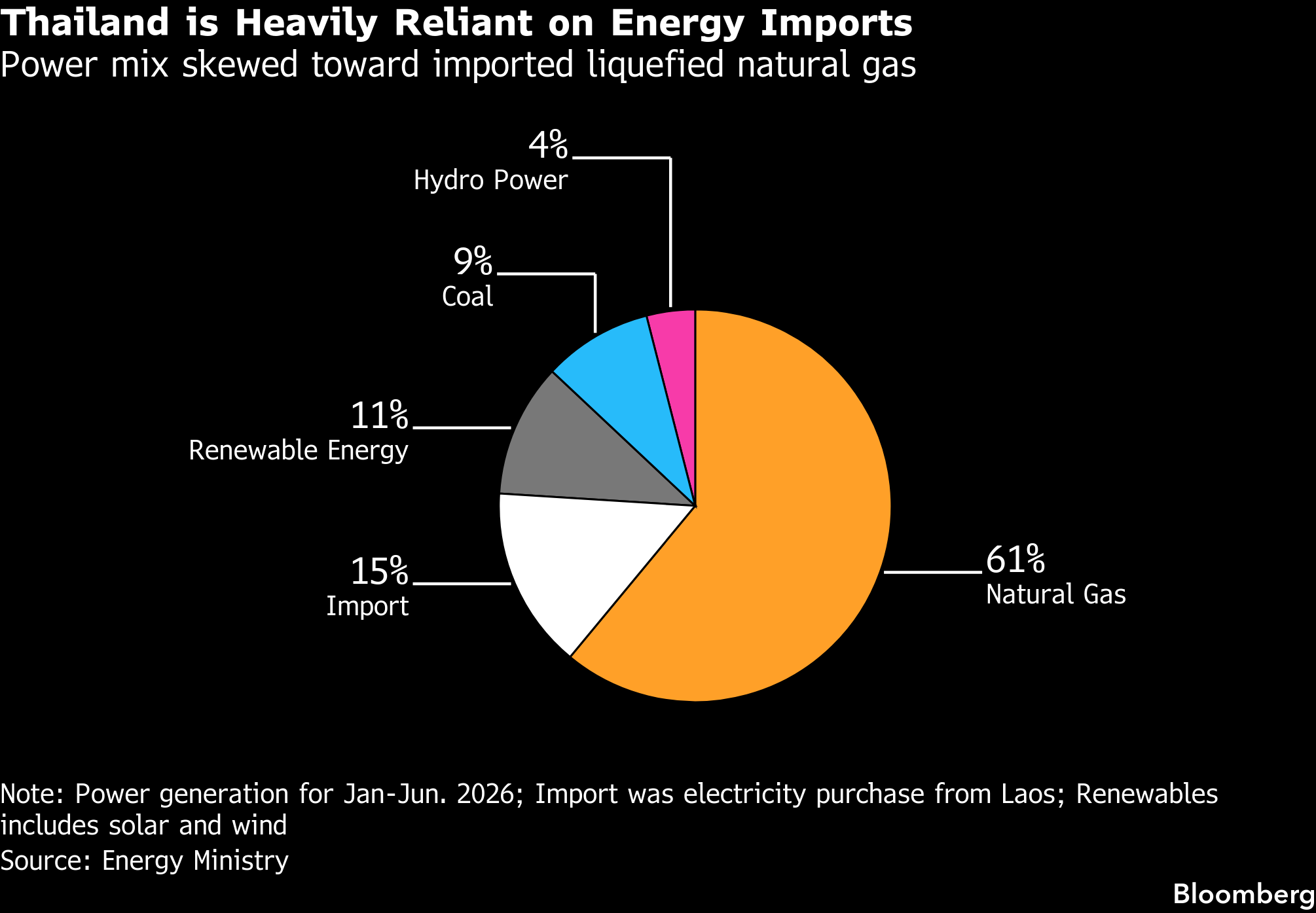
Thailand currently generates more than 60% of its electricity from natural gas, most of which is imported, leaving it exposed to events like the Middle East conflict that spurred a surge in the price of seaborne liquefied natural gas. Increasing renewable capacity — around 15% of the power mix at the moment — would curb the need for imported fuel and also support the nation’s goal of getting to net zero by 2050.
The doubling down on renewables — which will require a rapid buildout — comes as Thai power demand is expected to increase sharply. The country has attracted billions of dollars of investment in data centers, cloud computing and advanced manufacturing. The government has been taking steps to ensure it has enough generation capacity to accommodate the rising demand to limit the impact on household power bills.
“The next wave of investment — from data centers to advanced manufacturing — will require enormous amounts of electricity,” Akanat said.
The new power plan will include nuclear energy for the first time, a significant shift in Thailand’s energy strategy, Akanat said. The government has been studying small modular reactors as a potential source of stable, low-carbon electricity to complement intermittent renewable, he said.
Akanat defended a government proposal to spend 200 billion baht ($6.1 billion) on renewable energy, including rooftop solar for villages, in parliament this week.
Thailand last revised its 25-year power development plan in 2023, which was before the Iran war and the artificial intelligence boom.
©2026 Bloomberg L.P.








